


Archive for the ‘POEtRY..’ Category
Teri Furqaat Guzari Jaari Hai By Jaun Elia
January 5th, 2014, posted in Jaun EliaFar beyond this mortal world in an afterlife we shall meet.
January 2nd, 2014, posted in BoYs, Death Note, POEtRY..
Brith And Death Of Mirza Asadullah Baig Khan Ghalib
December 27th, 2013, posted in DAtEs iN a YeAR, Ghalib, POEPLes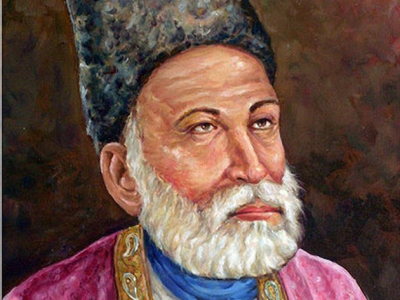 Ghalib was born on December 27, 1796 in the city of Akbarabad (present Agra). He was an all-time great classical Urdu and Persian poet.
He wrote several ghazals during his life, which have since been interpreted and sung in many different ways by different people. Mirza Asadullah Baig Khan Ghalib is considered, in South Asia, to be one of the most popular and influential poets of the Urdu language. Ghalib today remains popular not only in India and Pakistan but also amongst diaspora communities around the world. Mirza Ghalib is considered to be the most dominating poet of the Urdu language.
He was one of the best of Urdu poets who led a drastic revolution in Urdu poetry with his words. Ghalib felt so much proud of his Persian poetry but his Urdu poetry like “Ghazals” are also much famous today.
Ghalib started composing poetry at the age of 11. His first language was Urdu, but Persian and Turkish were also spoken at home. He got his education in Persian and Arabic at a young age.
Mirza Asadullah Baig Khan Ghalib died on February 15 1869.
Humsafar-Companion- Urdu Poetry Translated
December 16th, 2013, posted in LYRiCS, PAKiSTAN, UNiVERSE
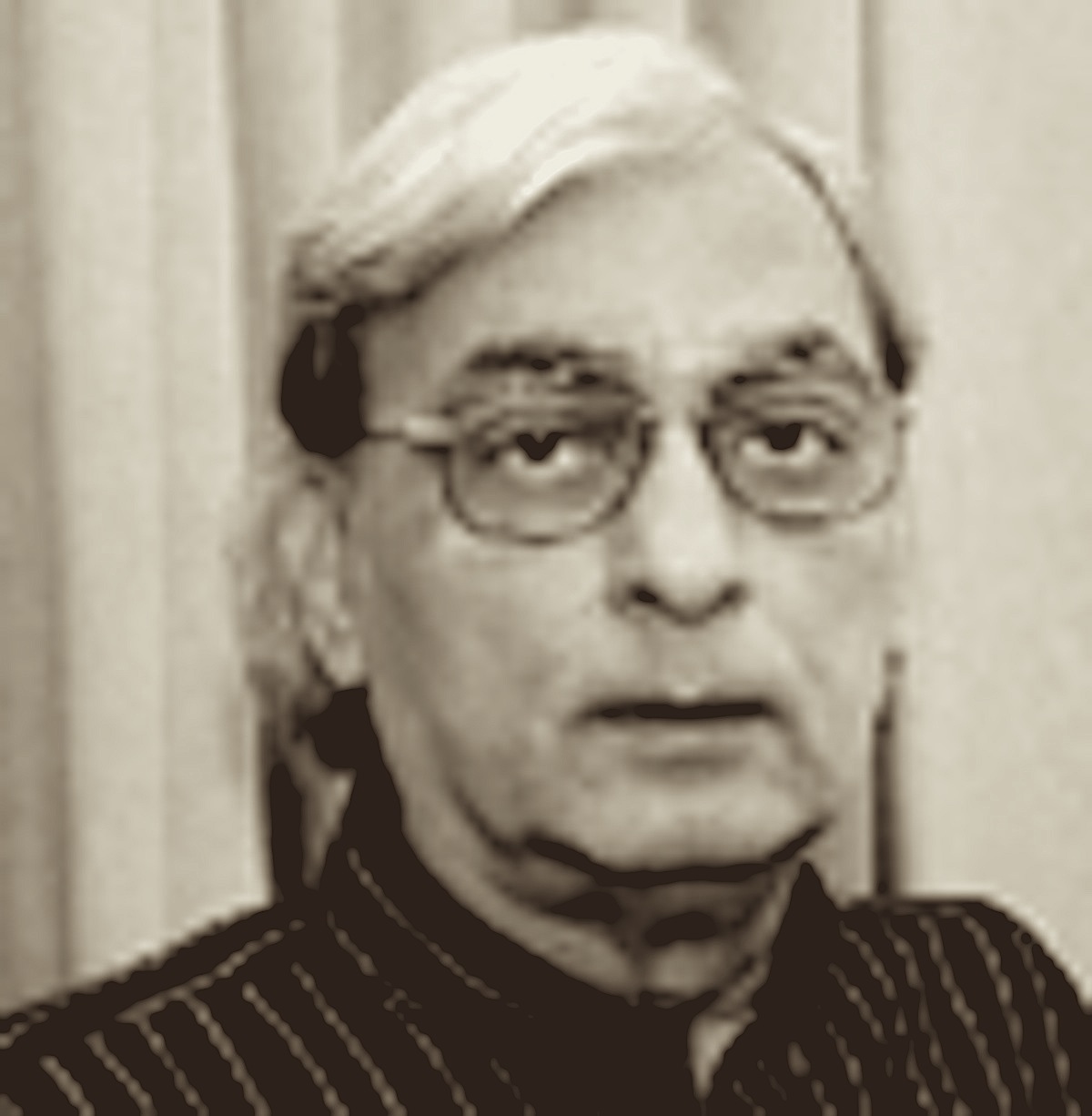
I didnt wrote this…
Found online…
And thought share for you guys….
I would like to add here that Naseer Turabi wrote this beautiful and so honest poetry when our brothers ,sisters ,mothers,fathers got separated from us and live in there new home i.e in 1971 after the fall of Dhaka . May they live happily and peacefully and may GOD and HIS mercy be us on all.
When we parted ways,
Neither you cried nor I,
But, what is this,
A peaceful sleep since,
Has not touched our eyes?
He was my companion,
But not in harmony were we,
Like the clouds and sunlight,
Together but as apart as can be.
There were feelings of animosity,
Indifference,
And anguish between us,
My departed lover, had been everything,
But unfaithful.
Last time I looked into his eyes,
My poetry reflected back at me,
Verses, that which I had never,
Recited to anyone.
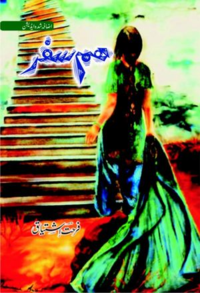
There is nothing more beautiful than Urdu poetry and English language can never do justice to it. So, this is a rather failed attempt at translating Naseer Turabis poetry but I cant help it as I just love the ghazal. Following is the Urdu version (only the part that I was able to translate):
Tark-e-taluqat pe roya na tu na main,
Lekin ye kya ke chain se soya na tu na main.
Woh humsafar tha magar us say humnawaayi na thi ,
Keh dhoop chayon ka alam raha, judaayi na thi.
Adawatain theen, taghaful tha, ranjishain theen magar,
Bicharne walay mai sab kuch tha, bewafayi na thi.
Bichartay waqt bhi un aankhon mai thi humari ghazal,
Ghazal bhi woh jo kisi ko kabhi sunayi na thi
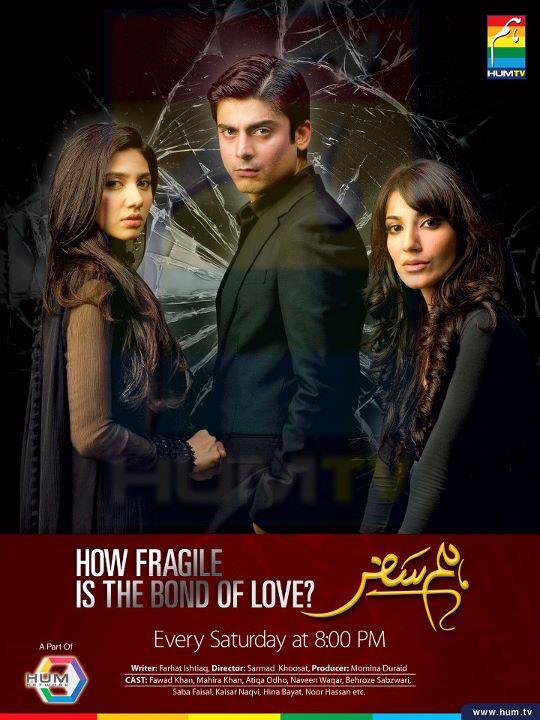
Aashiqaan -e- Jaun ko Jaun Elia ki 81 Youm -e- Wiladat
December 14th, 2013, posted in Jaun Elia, PAKiSTAN, POEPLesAbout :
He was a notably Urdu poet, philosopher, biographer, scholar and the giant of Urdu Literature.
Biography :
Jaun Elia (Urdu: جون ایلیا, December 14, 1931 – November 8, 2002) was a notable Pakistani Urdu poet, philosopher, biographer and scholar. He was widely praised for his unique style of writing. He was the brother of renowned journalist and psychoanalyst Rais Amrohvi and journalist and world-renowned philosopher Syed Muhammad Taqi, and husband of famous columnist Zahida Hina. He was a man of letters, well versed in Arabic, English, Persian, Sanskrit and Hebrew.
Jaun Elia was born on December 14, 1931 in an illustrious family of Amroha, Uttar Pradesh. He was the youngest of his siblings. His father, Allama Shafiq Hasan Elia, was deeply involved in art and literature and also an astrologer and a poet. This literary environment modeled him along the same lines, and he wrote his first Urdu couplet when he was just 8.
Jaun was very sensitive in his early teen age. His preoccupations in those days were his imaginary beloved character, Sophia, and his anger at the English occupiers of India. He used to do dramatic presentations of the early Muslim period, and hence his knowledge of Muslim history was recognized by many. According to him, his early poetry reflected the dialogue nature of stage drama.
A close relation of Elia’s, Syed Mumtaz Saeed, recalled that Elia also went to Syed-ul-Madaris in Amroha, a Madressah (Koranic school). “Jaun had a way with languages. He could learn them effortlessly. Apart from Arabic and Persian that he had learnt at the Madressah, he acquired great proficiency in English and a smattering of Hebrew.”
A close relation of Elia’s, Syed Mumtaz Saeed, recalled that Elia also went to Syed-ul-Madaris in Amroha, a Madressah (Koranic school). “Jaun had a way with languages. He could learn them effortlessly. Apart from Arabic and Persian that he had learnt at the Madressah, he acquired great proficiency in English and a smattering of Hebrew.”
During his youth, the united India was involved in a Muslim-Hindu feud, which led to the partition of the country on religious lines once British rule ended. Being a Communist, Elia was averse to the idea, but finally accepted it as a compromise. Elia migrated to Pakistan in 1957, and made Karachi his home. Before long, he became popular in the literary circles of the city. His poetry, which bears ample testimony to his wide-ranging reading habits, won him acclaim and approbation. Poet Pirzada Qasim said: “Jaun was very particular about language. While his diction is rooted in the classical tradition, he touches on new subjects. He remained in quest of an ideal all his life. Unable to find the ideal eventually, he became angry and frustrated. He felt, perhaps with reason, that he had squandered his talent.” He was a prolific writer, but could not be convinced to publish his work. His first poetry collection Shayad (an Urdu word which means “Maybe”) was published in 1991, when he was 60. The poetry presented in this collection added Jaun
Elia’s name in the Urdu literary canon forever. Jaun Elia’s preface in this collection provided deep insights into his works and the culture within which he was expressing his ideas. The preface can also be considered as one of the finest examples of modern Urdu prose. It covered his intellectual evolution in different periods of time, and his philosophy of poetry, science, religion, etc. The second collection of his poetry Ya’ani was published posthumously in 2003 . Afterwords Jaun’s trustworthy companion Khalid Ansari has compiled and published his three consecutive collections, “Gumaan†(an Urdu word which means “Illusion”) in 2004,”Lekin” 2006 and “Goya” 2008, one more collection “Kyon” is now under processing.
An eminent Urdu literary critic, Dr. Muhammad Ali Siddiqui has called Jaun Elia one of the three most eminent ghazal poets of Urdu of the second half of the twentieth century.
Jaun Elia was an unabashed open anarchist and nihilist in generally a conservative and religious society. His elder brother, Rais Amrohvi, himself a poet and influential intellectual, was brutally murdered , and ever after his death, Jaun was conscious about what he would say in public.
Jaun Elia was an unabashed open anarchist and nihilist in generally a conservative and religious society. His elder brother, Rais Amrohvi, himself a poet and influential intellectual, was brutally murdered , and ever after his death, Jaun was conscious about what he would say in public.
Jaun was also involved in translation, editing and other activities. He briefly worked as an editor with Ismaili Tariqah and Religious Education Board (ITREB), in Karachi Pakistan. His translation of various Mautazalite treatises, a book on 12th century Fatimid revolutionary Hasan Bin Sabah, and also various texts about the Ismaili sect in Islam are a major contribution to the Urdu language and literature. His prose and other translation of major Ismaili philosophical works are not easily available, yet some of these can be found at Ismaili Tariqah Board libraries in Karachi and elsewhere.
He acquired encyclopedic knowledge of philosophy, logic, Islamic history, the Muslim Sufi tradition, Muslim religious sciences, Western literature, and Kabbala. He also synthesized this knowledge into his poetry that also differentiates him from his modern contemporaries.
He also edited Urdu literary magazine “Insha”, where he came to know of another prolific Urdu writer Zahida Hina, and finally married her. Zahida Hina, a progressive intellectual in her own right, still writes for dailies, Jang and Express, on current political and social issues. He had 2 daughters and a son with her. Jaun and Zahida were divorced in mid 1980s. This left Jaun devastated and alone. He became alcoholic and depressed.
He died after a protracted illness on November 8, 2002 in Karachi.
Poetry collections :
Shayad, 1991
Ya’ani, 2003
Gumaan, 2004
Lekin, 2006
Goya, 2008
About Him :
Born December 14, 1931
Amroha, Uttar Pradesh, British India
Died November 8, 2002 (aged 70)
Karachi, Sindh, Pakistan
Occupation Urdu poet, Scholar
Nationality Pakistani
Ethnicity Muhajir
Genres Ghazal
Notable work(s) “Shayad”
Spouse(s) Zahida Hina
Relative(s) Shafiq Hasan Elia (father)
Rais Amrohvi (brother)
Syed Muhammad Taqi (brother)

Jaaney kaun zamaaney thay wo, jin mein thee dil ki guzraan,
Likhtey hain yun apney kutbey jaisey kitaabon ke thay ham..!
Aashiqaan -e- Jaun ko Jaun Elia ki 81 Youm -e- Wiladat