
Archive for June, 2011

Ali Maula, Ali Maula

June 9th, 2011, posted in Nusrat Fateh Ali Khan Songs, POEtRY.., Sufism
Share

*Ali Maula, Ali Maula*

Man Kunto Maula

shaah-e-mardaaN
sher-e-yazdaaN
quvvat-e-parvardigaar
laa fataa illaa Ali
laa saif illaa zulfiqaar

King of the brave,
lion of God,
[and] strength of God.
There is no one like Ali [and]
there is no sword like Zulfiqaar*.

* Zulfiqaar was the sword of Ali presented to him by Muhammad.

Ali imaam-e-manasto manam Ghulaam-e-Ali
hazaar jaan-e-giraamii fidaa-e-naam-e-Ali

Ali is the master of all, I am the slave of Ali
thousands life are to be sacrificed for Ali.

man kunto maulaa
fa haaza Aliun maulaa

To whom I am the master
Ali is the master.

Note: A famous tradition (hadith) of Prophet Muhammad. Ali was his cousin and son-in-law.

daaraa dil daaraa dil daar-e-daanii
tum tum taa naa naa naanaa, naanaa naanaa re
yaalaalii yaalaalii yaalaa, yaalaa yaalaa

Mystical chants sung by Sufis without any specific meaning.

In some versions, Nusrat has also recited the following stanza:

Ali shaah-e-mardaaN imaamun kabiiraa
ke baadasht nabii shud bashirush naziiraa

Ali is the king of the brave and the great leader
because after the Prophet there is Ali.

Ali imaam-e-manasto manam Ghulaam-e-Ali
hazaar jaan-e-giraamii fidaa-e-naam-e-Ali

Ali is the master of all, I am the slave of Ali
a thousand lives are to be sacrificed for Ali

Note: Ali was the cousin and son-in-law of Prophet Muhammad. He is especially revered by the Sufi mystics.

Haidariam qalandaram mastam
bandaa-e-Murtaza Ali hastam
peshvaa-e-tamaam virdaaram
ke sage kuu-e-sher-e-yazdaanam

Haider [Ali] is the generous monk
Ali is the chosen one [by God]
[and] the leader of the people swaying in [God’s] remembrance
I am the dog of the streets of God’s lion.

kabhii diivaar hiltii hai, kabhii dar kaaNp jaataa hai
Ali kaa naam sun kar ab bhii Khaibar kaaNp jaataa hai

Sometimes the wall shakes, sometimes trembles the door
on listening the name of Ali, the fort of Khaibar trembles even now.

Note: During the fight for the Fort of Khaibar, Ali rooted out the heavy door of the fort and used it as his shield.

Shaah-e-mardaaN Ali..
Ali..Ali…Ali…
Ali Maula Ali…

King of the brave
Ali
Ali, [my] master Ali.

patthar pe alam deen ka gaaRaa jisne
lalkaar kar Marhab ko pichaaRaa jisne..

Lyrics: Amir Khusro
Singer: Nusrat Fateh Ali Khan

Share

Our World Size

June 8th, 2011, posted in UNiVERSE
Share

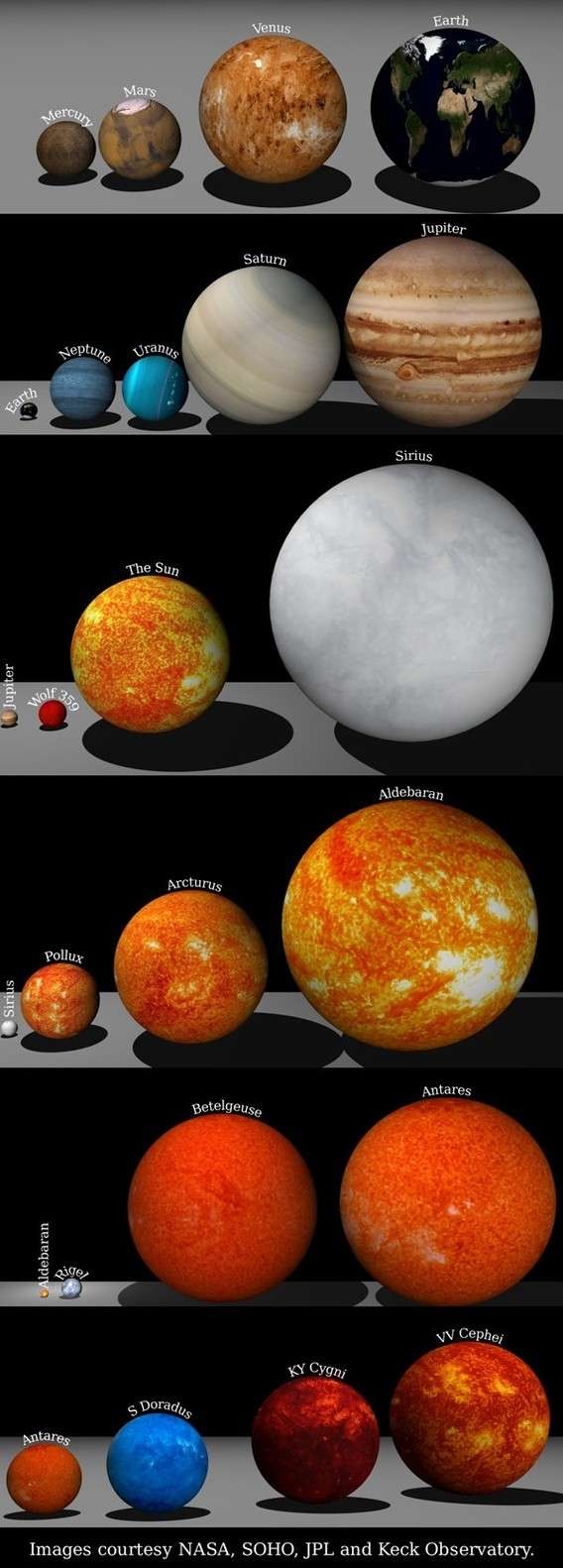
We all hv always been wonder how big our universe is..How big our WORLD is…how is big the MARS is…well not that chocolate mars…no matter big n delightful it is we want more n more of it…but right now i am not talking about mars…i am talking about MARS…the planet mars…from which people say that if men are from mars …women are from vence… 😉

Now can i have your focous on de topic agian plz… 😀

So,where were we…yea..about our universe…universe…
It sure is unique…with lots n lots of strange things….

You wont believe it until u c it…i just came across this pic…
so i thought y now post out here n let others know abt it as… ;D

Share

Just Because..

June 7th, 2011, posted in BoYs, LoVE, POEtRY..
Share

Just Because I’m Not Begging For You..
Doesn’t Mean I Don’t Want You Just As Bad…
Just Because I’m Not Crying…
Doesn’t Mean I Don’t Care, Or That I’m Not Sad…
Just Because I Don’t Call You Every Night…
Doesn’t Mean I Don’t Want To Talk To You…
Just Because I Wish You The Best With Your New Guy…
Doesn’t Mean I’ve Stopped Loving You…
Or That I’ll Move On Now…
Just Because I’m A Good Actor…
Doesn’t Change The Fact That I’m Dying Inside…
🙁

Share

Wohi Khuda Hai

June 6th, 2011, posted in Islam, LYRiCS, POEtRY.., Sufism
Share

*Koi To Hai Jo Nizam-e-Hasti Chala Raha Hai*

ko’ii to hai jo nizaam-e-hastii chalaa rahaa hai..
Wohii Khudaa hai..Wohii Khudaa hai..Wohii Khudaa hai…
dikha’ii bhii jo na de nazar bhii jo aa rahaa hai
Wohii Khudaa hai, Wohii Khudaa hai, Wohii Khudaa hai

(Someone is there who is managing the order of life
He is God, He is God, He is God
He is invisible still He can be seen
He is God, He is God, He is God)

nazar bhii rakhe sama’ateN bhii…Wo jaan letaa hai niyyateN bhii..
jo Khaana-e-laa-shauur meN jagmagaa rahaa hai…Wohii Khudaa hai..
Wohii Khudaa hai, Wohii Khudaa hai, Wohii Khudaa hai..

(He keep eyes and ears too, He knows even the intentions
The one who is illuminated in our subconscious minds
He is God, He is God, He is God)

Talaash us ko na kar butoN meN.. Wo hai badaltii hu’ii rutoN meN
Jo din ko raat aur raat ko din banaa rahaa hai…Wohii Khudaa hai
Wohii Khudaa hai…Wohii Khudaa hai..Wohii Khudaa hai

(Do not search for Him in the idols, He is in the changing seasons
The one who is changing day to night and night to day
He is God, He is God, He is God)


Share

Abu-Al-Asar Hafeez Jalandhuri

June 5th, 2011, posted in PAKiSTAN, POEPLes
Share

Abu-Al-Asar Hafeez Jalandhuri writer, poet and above all composer of the National Anthem of Pakistan. He was born in Jalandhar, Punjab, India on January 14, 1900. After independence of Pakistan in 1947, Hafeez Jullundhri moved to Lahore. Hafeez made up for the lack of formal education with self-study but he has the privilege to have some advise from the great Persian poet Maulana Ghulam Qadir Bilgrami. His dedication, hard work and advise from such a learned person carved his place in poetic pantheon.

Hafeez Jullandhuri actively participated in Pakistan Movement and used his writings to propagate for the cause of Pakistan. In early 1948, he joined the forces for the freedom of Kashmir and got wounded. Hafeez Jalandhari wrote the Kashmiri Anthem, “Watan Hamara Azad Kashmir”. He wrote many patriotic songs during Pakistan, India war in 1965.

Hafeez Jullandhuri served as Director General of morals in Pakistan Armed Forces, and very prominent position as adviser to the President, Field Marshal Mohammad Ayub Khan and also Director of Writer’s Guild.

Hafeez Jullundhri’s monumental work of poetry, Shahnam-e-Islam, gave him incredible fame which, in the manner of Firdowsi’s Shahnameh, is a record of the glorious history of Islam in verse. Hafeez Jullandhuri wrote the national anthem of Pakistan composed by S.G.Chhagla. He is unique in Urdu poetry for the enchanting melody of his voice and lilting rhythms of his songs and lyrics. His poetry generally deals with romantic, religious, patriotic and natural themes. He chooses his themes, images and tunes from the subcontinent and his language is a fine blend of Hindi and Urdu diction, reflecting the composite culture of South Asia.

Hafeez was born in Jalandhar, India in a Rajput family. His father was Shams-ud-din who was Hafiz-e-Qur’an. He firstly studied in mosque and then got admission in some local school. He got education up to seventh class. He got no more formal education.

Recently, an Indian poet Jagannath Azad, son of Lahore-based poet Tilok Chand Mahroom, claimed that long before Hafeez Jullundhri’s lyrics were adopted as the national anthem in 1950s, Pakistan had an anthem written by him. He was commissioned by Muhammad Ali Jinnah to write the anthem three days before the creation of Pakistan in 1947. After long debates on this issue in Pakistan, researchers have declined Azad’s claim to be the poet of first national anthem of Pakistan. Dr Safdar Mehmood, a famous researcher in Pakistan, has written an article in ‘Daily Jang’ (6 June 2010), researching this topic a bit further. Based on his research, Dr Mehmood suggests that while there might be a possibility that Azad might have written a national (milli) song which was broadcast by Radio Pakistan after 1947, however, there is no evidence of Azad’s meeting with Jinnah nor of the claim that he wrote a national anthem for Pakistan which was approved by Jinnah and which was broadcast by Radio Pakistan as the new country’s national anthem. In fact, there is no record of the broadcast of Azad’s anthem in the official archives of Radio Pakistan. Azad has also claimed that he was awarded ‘Iqbal Medal’ in 1979 by the Government of Pakistan. Again, this claim is not true as his name is not included in the governmental record of national award holders maintained by the Cabinet Division of Pakistan.

He first married in 1917, when he was seventeen years old. His first wife was his cousin “Zeenat Begum”. They altogether had seven children, all of them girls and no boys. In 1939 he married for the second time with a young English woman and had one girl with her. This marriage ended in a divorce. His first wife died in 1954. In 1955 he married with Khurshid Begum. The third relation also gifted him one girl.

In 1922 – 1929 he remained the editor of a few monthly magazines namely, “Nonehal”, “Hazar Dastaan”, “Teehzeeb-e-Niswan”, “Makhzin”. His first collection of poems Nagma-e-Zar was published in 1935. After the World War II, he worked as the director of the Song Publicity Department. During this same time he wrote songs that were much liked by the public.

He died on December 21, 1982 at the age of eighty two years. He was buried in Model Town, Lahore but later on his dead body was re-buried in the tomb near Minar-e-Pakistan.

Share