Archive for the ‘ChARACtERs’ Category

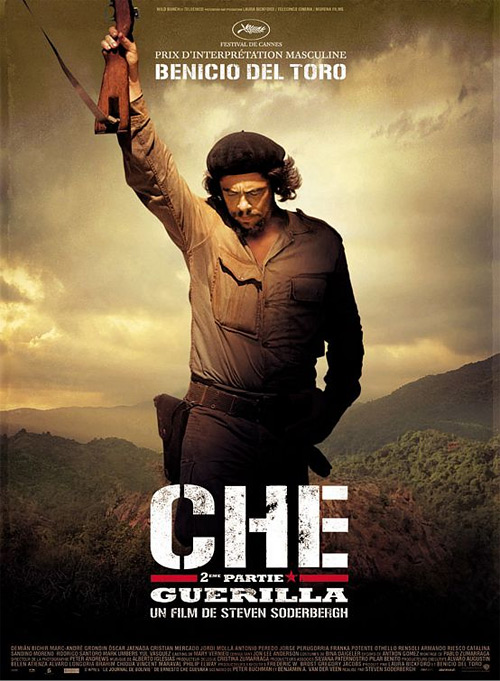
The Capitalization of Che Guevara

May 13th, 2013, posted in ChARACtERs, Ink On PAPER, No Smoking, POEPLes
Share

This is something which I found online and sharing with you guys. Enjoy :

The Capitalization of Che Guevara,Che Guevara,Capitalization,Che, Guevara, criminal, diseased ,minds,mind,youth,young,people,world,t-shit,smoking,revolutionary,revolution,youth icon,revolutionary face,revolution face

The cigar smoking bearded young man with deep eyes stares at you from beyond the grave… through the tee-shirts and from the Facebook walls and in the posters of countless youth hostels across India. Ernesto ‘Che’ Guevara lives on relentlessly marketed in every conceivable consumer item of youth life today.

Che the failed revolutionary is a grand success as a youth icon.

The Capitalization of Che Guevara,Che Guevara,Capitalization,Che, Guevara, criminal, diseased ,minds,mind,youth,young,people,world,t-shit,smoking,revolutionary,revolution,youth icon,revolutionary face,revolution face,smoking,no smoking,cigar

Perceived by a vast majority of youths as a rebel who fought for a just cause, he comes in handy to declare one’s own inner rebel. A youth who wears Che on his extended epidermis that we call as Tee-shirt, it’s a proclamation that he is a co-rebel in the cause. Forget that the youth in question may actually be toiling in the call center for consumers in the US of A Forget that the youth in question may drink Coca Cola and burp fried chickens with Kentucky labels. Still with Che’s stern eyes peering out of his chest, he can consider himself the quintessential rebel – the eternal angry youth. In other words it is the easy way out to be a rebel and at the same time lead a life confirming to all consumerist and peer pressures.

The Capitalization of Che Guevara,Che Guevara,Capitalization,Che, Guevara, criminal, diseased ,minds,mind,youth,young,people,world,t-shit,smoking,revolutionary,revolution,youth icon,revolutionary face,revolution face,smoking,no smoking,cigar

But the problem is not just merely about making a superficial statement of being a pseudo-rebel. Che is also a Trojan for certain memes. In adoring Che, unknowingly these memes get internalized and enter the youth psyche. It is not unlike the worm malware tunneling into your system. The youths begin to venerate the ideology that created Che and the violence that is inherent in it. In fact violence has been cardinal to Che’s life philosophy. It’s not mindless brutal violence but cold blooded calculated violence.

The Capitalization of Che Guevara,Che Guevara,Capitalization,Che, Guevara, criminal, diseased ,minds,mind,youth,young,people,world,t-shit,smoking,

In the famous – or is that notorious- ‘Message’ he sent his comrades from Bolivia, he wanted them to develop “hatred as an element of struggle”. He elaborated the point further:  “unbending hatred for the enemy, which pushes a human being beyond his natural limitations, making him into an effective, violent, selective, and cold-blooded killing machine.” The supreme irony is that the youth who wears Che on his clothing may even be wearing him as an icon of universal humanism! And slowly the poison enters his system: the poison of hatred for the ideological enemy – the demonizing and dehumanizing of ‘the other’.

The Capitalization of Che Guevara,Che Guevara,Capitalization,Che, Guevara, criminal, diseased ,minds,mind,youth,young,people,world,t-shit,smoking,revolutionary,revolution,youth icon,revolutionary face,revolution face,smoking,no smoking,cigar

Che made diary entries when he was leading his ‘revolutionary’ life. They reveal a pathological killer in love with murder. For example, in January 1957, Guevara had a problem. Che developed doubts about one of his comrades Eutimio Guerra – that Guerra might be a spy. In his own words let us hear how he solved the problem: “I ended the problem with a .32 caliber pistol, in the right side of his brain…. His belongings were now mine.”  The pattern is repeated in diary entries – Che’s solution seems to be simple: when in doubt, kill.

The Capitalization of Che Guevara,Che Guevara,Capitalization,Che, Guevara, criminal, diseased ,minds,mind,youth,young,people,world,t-shit,smoking,revolutionary,revolution,youth icon,revolutionary face,revolution face,smoking,no smoking,cigar

Even Che’s martyrdom was an after-constructed myth. The reality of Che’s martyrdom is far from being a socialist martyr fell by the despicable capitalist and imperialist forces. In reality information about Che’s movements in Bolivia which were passed on to the army, seemed to have originated from Cuba and reached CIA through Soviet hands. The treacherous source seems to be ‘Tania’, girl friend of Che, outside his wedlock, who was actually a honey trap from East Germany working for Soviet KGB. Socialist regimes were as much to blame, perhaps more so to blame as that ‘imperialist Satan’ US, which we all love to hate. And even in the end when he actually had an opportunity to become a martyr fighting the army, Che voluntarily surrendered himself to the authorities. He came out of his hiding with hands raised, pleading to spare his life as he was ‘more valuable to you (Bolivian army) alive than dead’.

The Capitalization of Che Guevara,Che Guevara,Capitalization,Che, Guevara, criminal, diseased ,minds,mind,youth,young,people,world,t-shit,smoking,revolutionary,revolution,youth icon,revolutionary face,revolution face,smoking,no smoking,cigar

The peak of paradox is that the very capitalist forces which Che despised so completely were the ones who had converted his face into a youth icon. Marketing Che as the face of the rebel youth started in 1997 – coinciding with the spread of globalization. As Che merchandise –from basketball caps to coffee cups- generates profits in the market, the photo has also generated copyright battles. In the globalized economy, Che is the coke and cola of revolution international. And like coke and cola, he has replaced in developing countries the local –more related and more rooted revolutionary icons.

Capitalization, Che, Che Guevara, Cigar, Criminal, diseased, Guevara, mind, minds, no smoking, people, Revolution, revolution face, revolutionary, revolutionary face, Smoking, t-shit, The Capitalization of Che Guevara, world, young, youth, young ,Che Guevara message

“I became a Communist. Communism made me a man” – Che Guevara. By ‘becoming a man’, many systems of organized thuggery mean the first taking of life.

The Capitalization of Che Guevara,Che Guevara,Capitalization,Che, Guevara, criminal, diseased ,minds,mind,youth,young,people,world,t-shit,smoking,revolutionary,revolution,youth icon,revolutionary face,revolution face,smoking,no smoking,cigar

Quote – “War to a young man is what childbirth is to a woman” – Hitler

Fact – Criminal gangs in Chennai as well as Sicilian criminals use the same slang term for murder and sexual encounter.

It is a mark of criminally diseased minds that they are incapable of distinguishing between the creation and destruction of life.

The Capitalization of Che Guevara,Che Guevara,Capitalization,Che, Guevara, criminal, diseased ,minds,mind,youth,young,people,world,t-shit,smoking,revolutionary,revolution,youth icon,revolutionary face,revolution face,smoking,no smoking,cigarNevertheless youths do need an icon. They need an icon, who can enthuse the consumed youths of this consumerist age, with ideals to live and grow by. The world needs an icon who can charge the youth to become harbingers of true reform not in little bits and pieces but “root-and-branch reform”. We need an icon to galvanize the international youth into action by appealing to their innermost being and their most profound love. We need a personality who can assure the youth of today with conviction that Love and not brutal violence that shall bring the final victory. We need as our icon someone who will ask us at our face, “Do you love your fellow men? Where should you go to seek for God — are not all the poor, the miserable, the weak, need help ? Why not help them first? Why go to dig a well on the shores of the Ganga? Believe in the omnipotent power of love. Who cares for these tinsel puffs of name?”

The Capitalization of Che Guevara,Che Guevara,Capitalization,Che, Guevara, criminal, diseased ,minds,mind,youth,young,people,world,t-shit,smoking,revolutionary,revolution,youth icon,revolutionary face,revolution face,smoking,no smoking,cigar

Share

Hector of Troy

October 24th, 2012, posted in ChARACtERs, MOViES
Share

Eric Bana from Troy

Hector of Troy, to me, embodies absolute honor. He is a dignified and loyal fighter, one who respects his opponent and understands the treachery of war. He is fierce and loyal in his love for his family and his home. He is strong, both physically and in spirit. He is kind and merciful. He is truly brave, and in that, a glorious warrior.

He is genuine, heroic, and sacrificing in a way that, at least in my opinion, a fighter like Achilles (however skilled he is) will never be. It is for all these reasons that I am moved to literal tears by his character every time I watch the film

Share

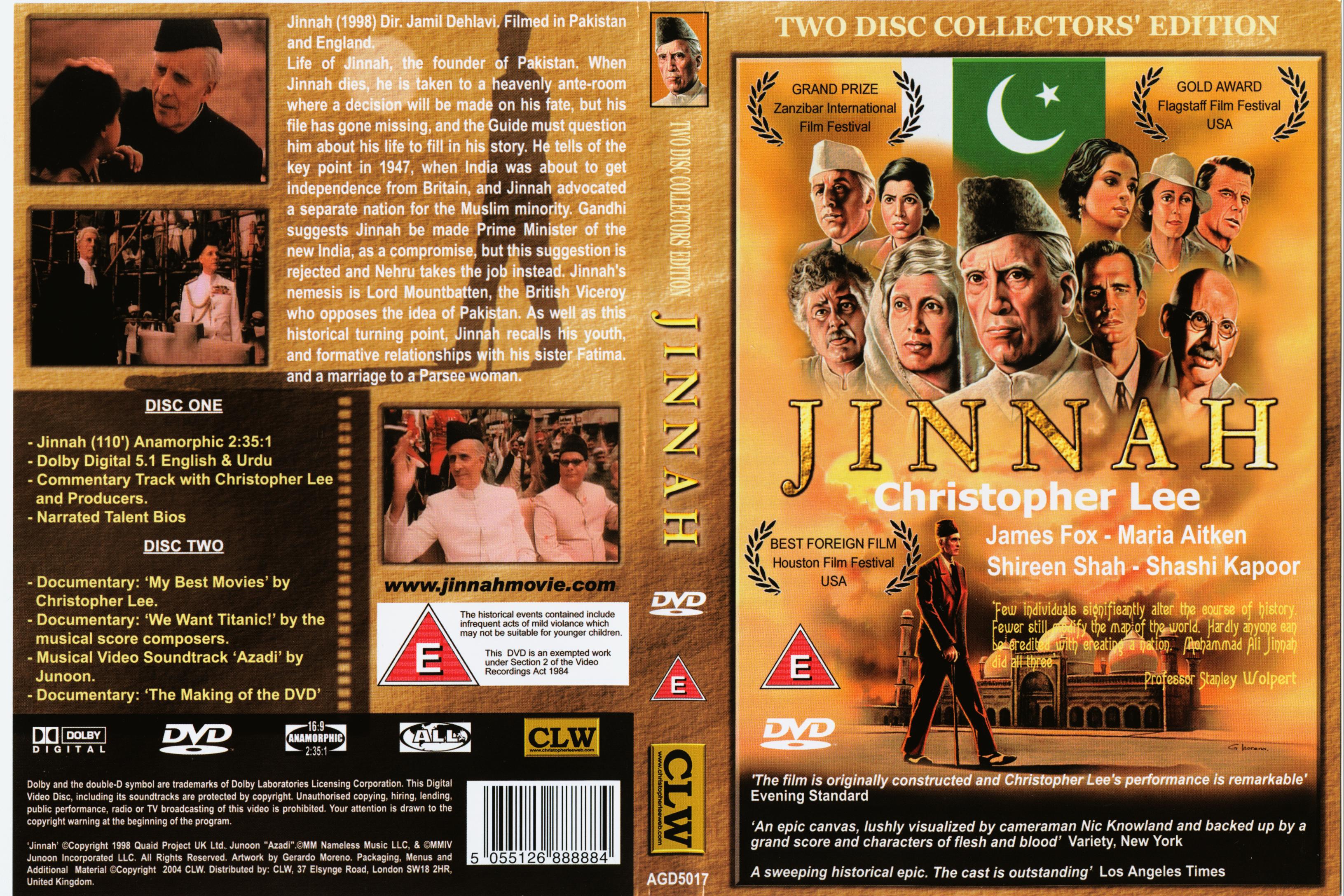
Lets Talk about Jinnah of Pakistan With Sir Christopher Lee

December 25th, 2011, posted in ChARACtERs, PAKiSTAN, POEPLes
Share

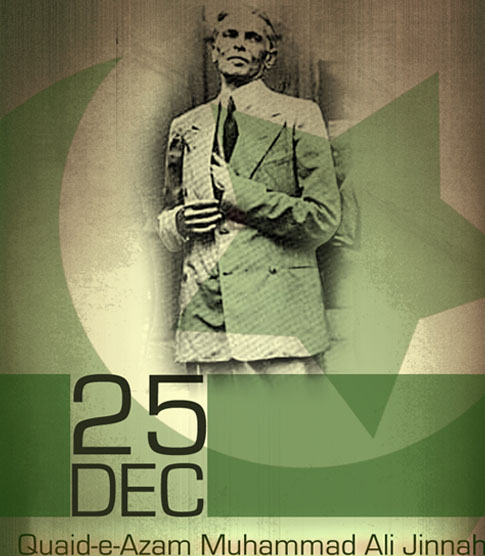
25 december

With all the buzz about Jaswant Singh’s book, our regular contributor, Asiha Fayyazi Sarwari, has shared the transcript of a radio show she did some time back.

In 2001 I had the opportunity to Interview Sir Christopher Lee for a radio show I produced for Pakistan News Service in California., Aisha

Aisha Sarwari: Sir Christopher Lee, we are honored to have you here on the show (Previously Pakistan News Service), thank you for your time.

Sir Christopher Lee: Not at all

Aisha Sarwari: I’d like to ask you a few questions about the recently released film, Jinnah of Pakistan, Produced by Jamil Dehlvi and directed by Akbar S. Ahmed. I am curious to know how an independent film like this inspire you to act as a lead, in comparison to box office hits like, say, The Lord of The Rings?

Sir Christopher Lee: You can’t compare one film with another. Because you have to remember that Jinnah was a comparatively low budget picture, although it looks like a very big budget picture. You can’t possibly compare a film which is about basically one individual and the people around him who created a nation with a film like The Lord of The Rings which is a great epic, in fact, it is three films. And it’s not just about basically one person, certainly not about one person who was a founder of a modern nation.
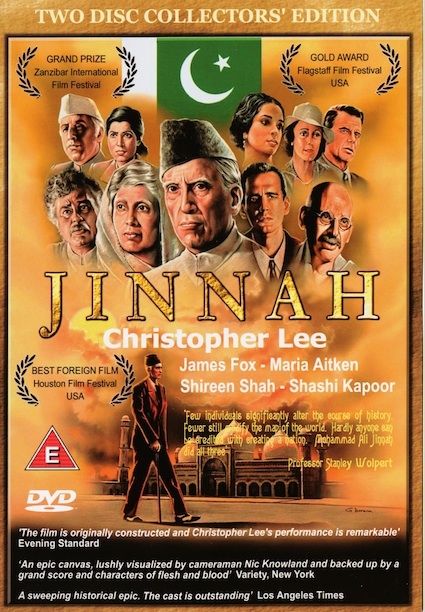
movie JinnahAisha Sarwari: What is your perception about Mohammad Ali Jinnah now, after the film, did it change significantly or did you know about him before you chose the movie?

Sir Christopher Lee: I think that the film Jinnah, is an extremely important film for many reasons and it should be seen now. The reasons, and there are quite a few of them: One, it shows the true meaning of Islam, Islam means submission to the will of God, it does not mean terrorism, fundamentalism. Secondly it shows the creation of a Muslim state and how it came into being. How the founder of that nation achieved this and again, it has nothing to do with all the dreadful things that are happening recently.

It is a story of a true Muslim and the people around him who decided that the Muslims of India need a country of their own. They say there are still sever million Muslims still living in India but of course Pakistan was created in 1947, recorded partition between Indian and what they call Pakistan. The man responsible for this, it was one man, Muhammad Ali Jinnah: known of course to Pakistan as the Quaid-e-Azam which means “The Great Leader.”

A brilliant man with great intellect, great determination and an iron will, honest, a man of total integrity and he believed implicitly in what he was doing and he was determined that it would be for the good of the Muslim population to have their own country. So the story is not just about the creation of a state which is of course with us today, it’s about basically one man and what he achieved, not just as a political leader but as a father, as a brother and a husband.

Now, a lot of this information is largely unknown to the vast majority of the people today and many hundreds of millions of Muslims around the world. He did single handedly, almost single handedly, not entirely single handedly, because obviously he had very fine advisers and determined dedicated people around him. He almost single handedly did create this nation.

And he was a dying man and he knew it. And this is quite clear in the film because he has a meeting with a doctor. He died of cancer of the lungs. He was a chain smoker and many of the photographs you see of him, he will have a cigarette or a pipe or a cigar in his hands, unless of course he was at an official function and he was making a speech. There is probably no doubt about that, that it probably hastened his death.

But he knew it, he knew he was dying which is even more remarkable that he was able to keep going. So, it is a story in a sense of the creation of a nation.

For me as an actor, it is certainly the most important role I have ever played, because of the responsibility on my shoulders was immense. I went to the country he founded. I was there for ten weeks playing the leader of the nation, the creator of the nation in the country he created in front of his own people.

And I can only say that with the exception of one newspaper which attacked us virtually everyday, we received the gratitude of virtually everybody I spoke to: members of his family, people who knew him, who worked for him and with him, some of them still alive today, considerably older than I am, most of them, but, the man on the street, wherever I went whether it was a member of the armed forces, whether it was a policeman, whether it was a somebody who owned a shop, whether it was a newspaper man, whether it was people working in the hotels, it didn’t matter, they all said the same thing to me: Thank You “ Thank you so much for coming to our country and making for the first time a film about our great leader, we are profoundly grateful.

The film has been shown in Pakistan for something like three months, both in English and in Urdu, which incidentally Jinnah did not speak very well and it was very successful.

It has also been shown at various festivals around the world. It has had the most wonderful reviews wherever it has been seen. In the western world as well as the eastern world, at the London Film Festival and the festival in New York, the reviews in the Los Angeles Times and a few of the other newspapers and the reviews here, were the best that I have ever had in my life as an actor. So of course that is immensely important to me, as an actor.

Aisha Sarwari: How did you recreate him in your acting?

Sir Christopher Lee: I tried to create a true picture, I certainly did resemble him, physically, I tried by looking at old newsreels to recreate the way he walked, the way he gestured, the way he spoke and his voice. The extraordinary thing was that he had absolutely no accent; he spoke English like I do, which is accordingly the way I spoke in the film.

One of the interesting things I was told was that he used to make speeches to something like a hundred thousand people, and his command over Urdu was not all that good, and he used to make speeches in English, to a hundred thousand people, practically none of whom understood at all, but it didn’t seem to make the slightest bit of difference.

When you talk about the word, charisma, which is often a word overused, but this is one man who had an amazing and extraordinary charisma, personality, presence, power and in spite of the fact that they may not have understood what he was saying, they did seem to know what he was talking about, so it’s a film of which we are all extremely proud, it should be seen, it deserves to be seen, and as I have explained at some length, for me as an actor, it is the greatest responsibility I have ever had and the best part I have ever had as an actor and probably so far as I am any judge the best performance I have ever given.Sir christopher lee as jinnah
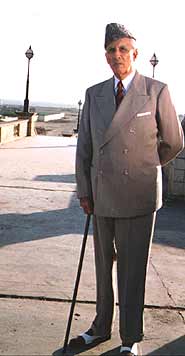
Aisha Sarwari: Can you tell us about how the props helped in the creation of Jinnah’s character, the fact that you had a cigar in some of the scenes, how did those affect your performance?

Sir Christopher Lee: Now there are actual photographs of Jinnah playing billiards or pool, or whatever it was they were playing, presumably English billiards. Actual photographs of him at the billiard table about to strike the ball with his cue, and he is smoking a cigar or he has a cigar in his hands. So that is why I did smoke, occasionally a cigarette at the breakfast scene with my daughter as she comes to tell me that she is going to marry a Parsi. I disapprove strongly, which is rather ironic in the view of the fact that Jinnah himself married a Parsi.

But, any scene that you see in which I am smoking is historically accurate.

Aisha Sarwari: As you mentioned, Pakistanis have tremendous reverence for Muhammad Ali Jinnah, or the Quaid-e-Azam-

Sir Christopher Lee: Oh yes. Absolutely.

Aisha Sarwari: How was your reaction generally to, you said it was a challenge, but what did you really feel when people came up to you and thanked you for giving his life such contemporary star power?

Sir Christopher Lee: I felt that it was a great honor. I felt a great sense of humility. As a western Christian playing an Asian Muslim, it would have been perfectly understandable for people to have objected, and some did. There was one particular individual insisted that I was deported, but that was thrown out of the courts.

That is why I say it was such a great responsibility. When people came up to me an expressed their gratitude and 99.9% did, it gave me a wonderful feeling of satisfaction, and it was a great privilege and a great honor to say this to me, because they meant every word of it, otherwise they wouldn’t have bothered.

Aisha Sarwari: What made you choose the film? What made you sign up for it?

Sir Christopher Lee: Of course, because of the age that I am now. I am 80 years old, I was well aware of Jinnah, just about as well aware as I was of Gandhi, though Gandhi got much more publicity over the years. I was well aware of Jinnah as a person, as a politician as a leader. His name was by all means not a strange name. It was a name of which I was very familiar because of the newsreels and the newspapers and indeed in 1947, I was 25 years old and I had come out of five years of war in 1946.

And I had been during the war with Indian troops because everybody was Indian then before the partition many of course being Muslims and many being Hindus and many being Sikhs. So it wasn’t a strange experience for me at all. I felt perfectly comfortable in playing the part.

The Pakistani actors in the film were very kind to me and we had a very distinguished Indian actor in the firm, Shashi Kapoor, and it was a great gathering of Pakistanis, British and Indians. And that is why the results were so encouraging and that is why I can only repeat, that it is a film that should be seen.

I really don’t know exactly why people are unwilling to show it theatrically, I think this will happen eventually on PBS, it might be on Network, it might be shown in the cinemas, in the theaters and it should be shown on DVD. It has already been shown on Sky satellite in UK for over a year. So it has been getting a showing, but not an overall world wide showing it should have.

People seem to be, perhaps the word is nervous, in showing it, because there is this great misconception around the world that has certainly not been helped by the acts of terrorism, especially after September the 11th, committed by Muslims. And it is a misconception that all Muslims are the same, they are not, and it may be that the theater owners or the distributers are unwilling or slightly anxious about showing this film incase people say, how can you show a film like this when we see what is happening in the whole world, which is the result of some act by Muslims.

You cannot possibly apply the adjective terrorist, fundamentalist, who no doubt are sincere in what they do, but who cannot possibly apply this to the vast majority of people who are Muslims, because it simply isn’t correct. That is why this film should be seen to give a true picture of the meaning of Islam and also of the founding of a Muslim state which was created for the right reasons.

If you go to Pakistan, I don’t think there is a single place you could go into, any restaurant, any building and any office where there isn’t either a photograph or a picture of the Quaid-e-Azam, at least wherever I went that is the case. He is much revered in Pakistan. It’s almost a god-like figure, certainly an icon. And I think this film is very important because as I said earlier, majority of Pakistanis are not aware of what went on in his life, except that he did found the nation.

Aisha Sarwari: What do you make of the secular Jinnah, The man whose vision encompassed Muslims as well as Christians, Hindus and Sikhs in Pakistan, especially with regard to his August 11th speech where he says, “You are free to go to your mosques and temples in this state of Pakistan”

Sir Christopher Lee: I think if you see in the film, when he speaks to Pakistani leaders, in which says, and I actually did say it word for word in the film, he said, and I am not saying it word for word now because I can’t remember it all, but he did say very clearly, you are free, all of you from any religion, free to worship your various churches, mosques, synagogues. This is very important I believe because he was advocating complete freedom, not only of speech, but of worship of all religions. That again tells you how he felt not just about Muslims and Hindus and Christians and Jews or any other religion you could think of “ Freedom of Worship, Freedom of Worship. He said this again and again and again in many words.


Aisha Sarwari: He also goes on to say, “this has nothing to do with the business of the state.”

Sir Christopher Lee: In other words, that’s quite true, he was saying, the state is the state. We are a Muslim state, but you don’t have to be a Muslim to practice your own religion. You can do it anywhere with complete freedom in a Muslim state. And I am not aware of that happening anywhere before in History.
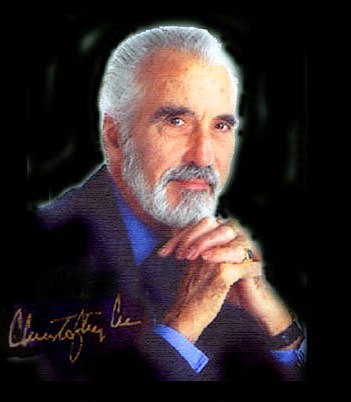
LeeAisha Sarwari: Tell us about your life as an actor and what is in your opinion, the role of an actor in the context of the world.

Sir Christopher Lee: Well I have been an actor for 56 years, and I have been involved in something like 250, 260 productions either as films or Television films, and so the role of an actor is to present characters and people, both imaginary and factual to an audience out there.

In this particular instance what we are telling is the truth. Of course there is this sequence of a surrealistic trial where Jinnah the barrister is in a sense the prosecuting counsel against Mountbatten. Now this is based on the truth because the witnesses coming forward are telling the truth, commander of the army who did not support him has to admit this on the witness stand; Radcliffe has to admit that the line, the boundary line, was changed on Mountabtten’s orders. And Lord Ismay also confirmed this that Mountbatten brought the date forward of Partition for personal reasons. So that trial was in a sense to establish the truth of what really happened at that time with regard to not only Jinnah, but Gandhi and Nehru and the Mountbattens.

Now, my role as an actor is to give the best performance I can give, in anything I do, to be convincing, to at times surprise the audience, to do something that they don’t necessarily expect. But basically it is to create people and that is the vocation of any actor who is a real professional and really cares about what he is doing.

Now, what was the second part of your question?

Aisha Sarwari: I asked about an actor’s role in the context of a global world.

Sir Christopher Lee: In the context of the world if you are making a contemporary story it has to be accurate. If you are presenting a Historical story, it has to be even more accurate because obviously sometimes you go back centuries and sometimes it is extremely difficult because you get differing information but we are talking about comparatively recent history now, 55 years ago and therefore in this instance it has to be completely honest and totally truthful because it is the modern era.

Aisha Sarwari: What do you make of Pakistan now, the bad press, the geopolitical issues?

Sir Christopher Lee: Well you’re not going to get me in a political conversation because I am not qualified to discuss it. At the present moment there is conflict between India and Pakistan, and has been for many many years, as I think everybody knows which is I think a great tragedy because apart from their religious differences they are essentially the same people.

Right now we have a military government in Pakistan with enormous responsibilities and with great problems and I think the president, General Pervez Musharraf is doing the best he can but it is very difficult for him. The same thing applies to the Indians. I think they are trying to solve the problem, the eternal problem, to what Jinnah referred to in this film as this mess about Kashmir.

I don’t know how this is going to be solved, I have no idea, I am not a politician, I am not a military man. I only hope it will be solved and the two countries live in peace but this is something that is a hope as far as I am concerned. A hope of many millions of people all around the world, because it is a very tense situations.

I think if the Quaid-e-Azam, Jinnah himself were to come back today, I think he would be very dismayed at what is taking place because this is something that he never envisaged, or thought would happen, although at the time of partition there was a great deal of death.

Aisha Sarwari: Sir Christoper Lee, I want to thank you for your time and as a Pakistani I thank you for portraying our leader so well.

Sir Christoper Lee: Not at all.  I am glad to have the opportunity to talk to you and I am glad that you have had the opportunity to have heard how I feel and what I am saying, because one is often so misrepresented in the press. And I am able now to give you my own, I have to emphasize this, my own personal feelings. Thank you, for the opportunity for me to do so.

Question from the audience: What do History Professors say about this film? Is this not most likely a History of Pakistanis?

Sir Christoper Lee: History Professors have said that this film may not be 100% accurate but it is acceptable. You must remember that although I knew what was paramount about Jinnah and although I learned a great deal more by reading about him from books and by talking to people who knew him, you must remember that I am still presenting on screen a person from a printed page.

A script was written, alright it was written by Pakistanis because they wanted the truth to be shown, because in the film, Gandhi by Richard Attenborough, Jinnah appears briefly as an evil character who threatens civil war “ That is a complete distortion of fact and of History.

Gandhi and Jinnah both got on very well. They both liked each other and they were friends, they were both lawyers, both Gujrati. They differed politically but there was no hatred, none. And there are some lovely moments in the film when Gandhi is asked what is Jinnah going to say and he says, Ah, Jinnah will say wily old Gandhi, And indeed because Jinnah does. They understood each other very well. They came very much from the same background, not religiously but in every other way.

Jinnah they say was even an actor at one stage in his life, but I am not sure there is any proof of that, but he certainly went to the House of Parliament to listen to people speaking, and he certainly practiced law successfully. He was very well acquainted with the English language and he was fluent in it, and if you listen to the tapes, there is no accent, not at all.

Gandhi of course did have an accent and a very strong one too. And I think the man who plays Gandhi in this film, Jinnah is absolutely brilliant, and I think he is, how do I say this with all respect, better than Ben Kingsley was.

I think everybody in this film gives extraordinary performance.
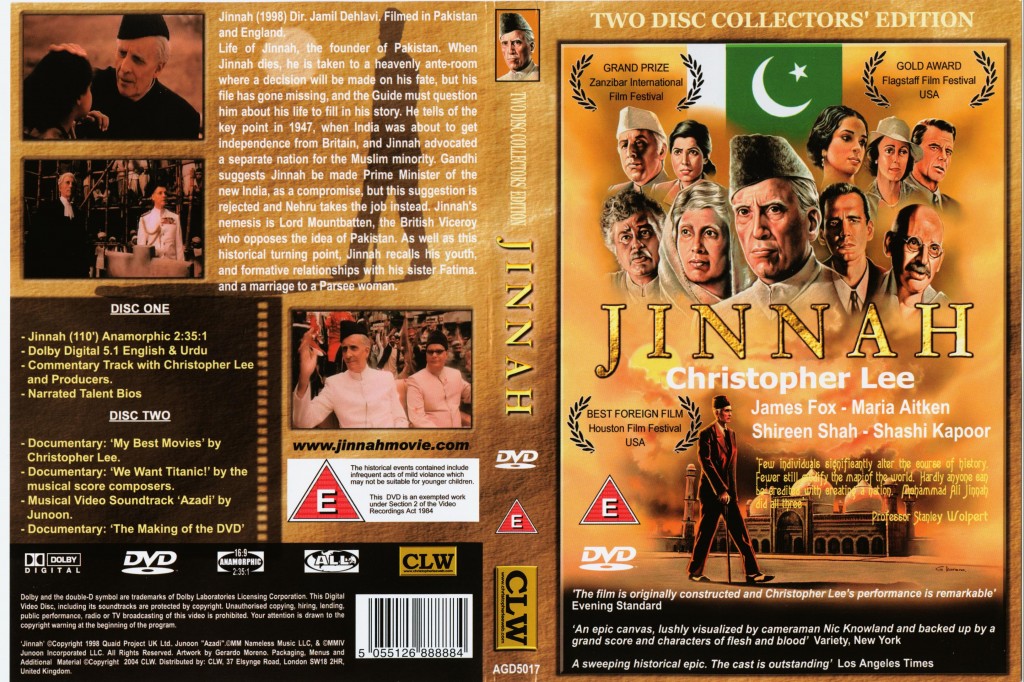
Jinnah Moive

— ————————————————————————-End Of Interview——————————————————————-

It is said that a good actor always get into its character and that what Sir Christopher Lee say about Quaid-e-Azam’s character :

Christopher Lee on Founder and Father of Pakistan ( Quaid-e-Azam )

Share

Who Was Jack Sparrow ??

June 18th, 2011, posted in ChARACtERs, Ink On PAPER, POEPLes
Share

In the late 16th century a young boy collecting scraps of wreckage from the docks wondered if he’d ever leave Faversham in the borough of Kent, the hottest place in the entire United Kingdom. It was a marshy place of little importance to anyone but the brigand. Its docks were a haven for smugglers and pirates and other such unsavory folk. That boy was John Ward, whose dreams would one day come true, though perhaps not in the way he had wanted; he would become Jack Birdy, the most fearsome pirate in the world, and towards the end of his life, Yusuf Reis, penitent Muslim, wealthy beyond any man’s dreams, spending the remainder of his life in his Tunisian palace.

The legendary Captain Jack Birdy, once sung about by every balladeer in England, might have all but been forgotten, yet his memory remains as the spirit behind the fictional character Captain Jack Sparrow played by Johnny Depp in the “Pirates of the Caribbean” film franchise. Who was Johnny Ward, the child rummaging through the fishing docks of Faversham? Who was John Ward, the British Naval officer? Who was Captain John Ward, the privateer endorsed by the Crown of England? Who was Captain Jack Birdy, the privateer turned pirate betrayed by that same Crown? And finally, who was Yusuf Reis, formerly Captan Jack Birdy, formerly Captain John Ward, who would rescue thousands upon thousands of Spanish Jews and Muslims fleeing the Moriscos and Conversos expulsion of the 16th and 17th centuries?These were all one man. With so many characters wrapped in one, the stories of his adventures are exponentially more exciting than anything a Hollywood film could capture.

What follows is a historical dramatization of William Lithgow’s second visit to Tunis as a guest of Captain Jack Ward, five years before his death. Some of the dialogue is interpolated but strongly based on historical fact. Some of the dialogue is verbatim from historical account. Every detail has been painstakingly researched for an accurate portrayal. It is a dramatization, but a historically founded one, no less. Though this begins towards the end of Captain Jack’s life, it is hopefully the beginning of your interest in this legendary man, fictionalized in Hollywood, demonized in Christendom, largely forgotten in the Muslim world. This is but one of many stories about him calling out from history yearning to be told…

“You see, mate. I’ve grown fond of a tiny little birdy, savvy?”
“Oh dear me. What’s her name and should I warn her?”
“No, you dinghy rat! A wee little birdy.”
“Little birdy? Captain Jack, do you mean a SPARROW?”

The old man chuckled, not having heard himself addressed as Captain Jack in what seemed to be many a lifetime spent. For now, he was simply Yusuf Reis1, a nobleman of Tunis wealthy beyond any Englishman’s dreams, and husband to Jessimina the Sicilian who was, like him, a renegade from Christendom.2

“No…ummm…chicks.”
“Chicks?!”
“Yes. Chicks!”

The zany old man, once a great pirate and commander at seas3—albeit, no less the zany one back then —was now just a tired silhouette of what he once was. He seemed happy though, as he lavishly entertained his guest, none other than myself, William Lithgow son of James4, not a pirate, nor a privateer, most definitely not a Turk5, but a Scotsman and a vagabond yearning to sojourn an endless trajectory. I have rummaged my way, by land and sea, from Scotland to the Levant, and now to Africa. Here in Tunis I would enter yet another chapter into my soon legendary journal, The Totall Discourse of the Rare Adventures and Painefull Peregrinations of long Nineteene Years Travayles from Scotland.6 This chapter would be about the eccentric old man before me, once the most feared Barbary Corsair in the world, John Ward – also known as Captain Jack Birdy.7 I had no idea what in Hades all this gobbledygook about “little birdies” was about, but I was eager to learn of his obsession with, for God’s sake of all things, chicks.

“Where are you leading me, Captain Jack? Am I following your drunken stupor?”
“Have you seen me sip gin or rum in the twice you’ve come? Since I traded captain’s hat for turban, I ne’er drank a drop ‘o bourbon.”
“Captain Jack is sober, and a poet no less. Has Christ returned?”

The old man smiled, and in an abstemious, yet telling, mockery of himself he coined something I shall merrily jot in my journal.

I drink water like an ass,
I am shoed like a horse,
I have a coat like a fool,
And a head like an owl!8

Captain Jack was a notorious drunkard, cunning and cruel, and taken to tomfoolery. Yet now, water and unfermented nectar were all Captain Jack would drink. The faithful Turk drinks neither ale, nor porter, nor wine, nor ardent spirits of any kind. Yet, he did not need strong drink to be just as mad. “Shoed like a horse” was in reference to the Turk’s shoes which are studded with iron. It is a fearful sight, I must say, lest you find yourself under one. His coat, and Captain Jack always wore an Englishman’s coat, was now the coat of a Turk. This silly, opulent and vain coat made him appear to me a fool, but he seemed to revel and bemuse himself in my outrage. I will not shy from saying that his turbaned head did look like an owl’s.

We first received news of Captain Jack’s and Sir Francis Verney’s apostasies in 1610 when the Venetian Ambassador to England, Marcantonio Correr, wrote the following invective to the Doge and Senate on December 23:

“There is confirmation of the news that the pirate Ward and Sir Francis Verney, also an Englishman [but] of the noblest blood, have become Turks, to the great indignation of the whole nation.”9

Nevertheless, I always thought Captain Jack turned Turk to jeer King James I, who would not pardon him10 and to gain quarter with the King of Tunis, Uthman Dey. Yet, now I see a man adherent to these ways and finding comfort in them. He is refined and lazy in his old age and married to a noblewoman of Palermo to the shock of every sea dog who ever heard his name. Captain Jack married? The Kraken be tamed! Yet, it was true. Captain Jack was a Lord of Tunis living in a palace of the finest varieties of marble and alabaster, and no longer a scourge of the sea. He was what the most madcap of jesters could not concoct: a freebooter and a saint.

We entered a dank barn-like structure that was quite sweltering for this pleasant September day in the year 1615. Ten of Captain Jack’s servants rushed in to help us view what had to have been the most uncanny sight I ever witnessed.* Before us were nearly 500 eggs hatching before my eyes within dozens upon dozens of incubators crafted with the unhallowed science of the Turk. The heat from each oven was answerable to the natural warmness of the hen’s belly; upon which moderation, within twenty days they come to natural perfection.11 Captain Jack, the greatest scoundrel to ever dominate the seas, was now raising chicks. For all the Turks’ barbarism, of which I have heard plenty, I have seen nothing in Barbary but mercantilism, incessant praying–it seems they never stop–and, quite frankly, ordinariness. The stories we hear in England of the Turks’ devilry and excesses are nowhere to be found and my eyes grow tired searching for them. I had hoped to write a tantalizing chapter or two about these provocative oddities but, alas, my inkwell is still full.

It is no mystery to me now why so many from Christendom found succor in the realm of the Turk. Captain Jack, his mate Sir Francis Verney, not to mention Captain Jack’s entire crew, the Dutchmen Meinart Dircxssen now Hasan Reis, and Jan Marinus of Sommelsdijk now known as Assam Reis, the Belgian Murad Flamenco of Antwerp12, as well as the scores of other Christians, all turned renegade from the faith and boasting the Kilij13 of the Corsair and following the religion of Mahomet. The tumult we have seen between Catholic and Protestant, and the flipping between the two as our Kings and Queens pass, are things they will not miss. Though I esteem the Turk to be a marauder who will slay for pittance, they all clamor to pray in their domed Djemats, the courtyards of which, dare I say, are places wherein I could get lost in reflection. They molest neither Protestant nor Catholic here, and Tunis has, this year, become a haven for Conversos, Jews forced to become Catholic or leave Spain under pain of death. Whether it be tolerance or indifference, man is not branded by his God here. Tunis is a bizarre place, yet it is nothing I was told of by my countrymen and brethren in faith. Today, this has further been confirmed to me by the legendary Barbary Corsair who is my host, Captain Jack Birdy, also known as John Ward, privateer then pirate, now Christian turn’d Turk.

As we left that strange aviary and walked through the floral pathway with fountains and rivulets on either side, I looked in the distance and saw Captain Jack’s palace that would turn the Kings and Queens of Christendom green with envy. I had so much to ask Captain Jack, yet such little time it seemed. The sun was now setting. As we approached the grandiose Casbah, Captain Jack stepped off the path towards a fountain, slipped off his iron studded Turkish boots, and handed me his coat. The blasted thing was heavier than it looked.

“I beg your pardon, but we have to make a stop.”
“I follow your lead, Captain Jack.”
“I must pray.”

I marveled at what little was left of the great Captain Jack Birdy in this penitent man. He began washing himself in the way Turks do before prayer. As we entered the citadel Captain Jack looked up to its spiraling minarets and squinted.

“You know, Will. Five years ago to this day I became Muslim in this very citadel, in the Djemat El-Kabir you see over there.”
“That was your choice, Captain Jack, and I will not say it does not vex me. For Christ be the Savior of the world and I feel your heart knows this, as does every gentleman in his core.”
“Mate, the innards of a man are known only to God and the fish who eat them. What I have seen on the high seas, the wars between Pope and Crown, and how they could give each other quarter but could afford me no pardon. I want none from them.”

It is the greatest irony that Captain Jack was seen as the most notorious renegade and traitor of England, yet he believed himself grassed by his country. His scowl of disgust quickly turned to a devilish smirk.

“William, will you join me? Here is where all journeymen such as yourself and I find themselves peace.”
“Pray to Whom you pray, Captain Jack. I will pray to Whom I pray for your salvation.”
“And I for yours. Very well.”

I waited for Captain Jack as he repeatedly bowed and prostrated like a Turk. Looking around at the splendor of the Sultans I marveled at how they had not yet taken the world from end to end. The thought of supping with the nobles and elite of Tunis made me pang with hunger. They were to have yet another lavish party for me as they did thrice before. I could not tire from their scrumptious wheat middling, succulent roasts and glistening fruits, the likes of which I have never seen. As my mind immersed in a leg of lamb, Captain Jack emerged with a grin and a strange glow.

“Come, Will. Supper will be served shortly.”
“This isn’t going to be like the party Yusuf Dey had for Simon the Dancer last year is it?”14
“That is not something to be a rib-ticklin’ about, mate. What happened to Simon Danseker is of no coziness to me or my men, but it was a debt paid. Simon would have had us all hangin’ from the yardarm and feedin’ the fish. He chose his way, savvy?”
“Aye, Captain. Pardon the jest.”

I had to quickly change the subject for it appeared that I had incensed the Captain. There was something about which I dearly wanted to hear: The little known and undocumented journeys of Captain Jack in the unchartered waters of the Western seas.

“Tell me of this proclamation for your capture that mentions ‘piratical activity in the West Indies.’15 I have a copy of it with me.”
“I have no need to see it. I lived it. The Caribbean. Knowing of Sir Francis Drake’s fortunes therewithal, the young scallywag that I was, I wanted to plunder those seas…and I did…quite well.”

As intriguing as this was, and as I was possibly the first person to get true details regarding his journeys in the Caribbean, for some reason I couldn’t get over his obsession with the little birds I had witnessed in the aviary only a few hours before.

“At least now I know why they call you ‘Birdy’.”
“William, do you know what they translate ‘Birdy’ to here? `Asfur. Some locals jokingly call me Jack `Asfur. Jack Sparrow. What an utterly stupid name. I guess that’s what I’ll be remembered as, eh?”
“I think not, Captain Jack. If they tell stories about you, they will most definitely not call you Captain Jack Sparrow.”

We approached the gate and as Captain Jack’s companions, all once Christian, all renegades turned Turk, drew the bridge for us to enter and greeted us with much merriment, the Captain turned to me with the smirk of that fiend whom I thought was all but forgotten.

“Shall I tell you about the Pirates of the Caribbean?”

A few interesting points about the real Jack Sparrow:

  • His real name was Captain Jack Ward and he was also known as Jack Birdy.He was on the run from the church when he converted to Islam in the late 16th century.
  • His entire crew also converted to Islam with him.Captain Jack Birdy was obsessed with little birds during his time in Tunisia (where he fled). So much that the locals would call him Jack Asfur, asfur being Arabic for sparrow. This is where the name Captain Jack Sparrow comes from.
  • His Muslim name was Yusuf Reis
  • He was married to another renegade from Christendom who also converted to Islam, Jessimina the Sicilian.
  • Whilst Captain Jack Birdy was known as a great drunkard, he stopped drinking alcohol when he converted to Islam.
  • He was instrumental in rescuing thousands of Spanish Jews and Muslims fleeing their expulsion from their lands in the 16th and 17th centuries.

**************************************************************************************

First of all I aint guilty as charged…
I found this from at here and now telling everyone what I found… ;D
http://www.suhaibwebb.com/society/en…dy-to-sparrow/

**************************************************************************************

Share

The Mullah & the Paradise

June 3rd, 2011, posted in Allama Iqbal, ChARACtERs, Ink On PAPER, PAKiSTAN, Scarface'S DIARY
Share

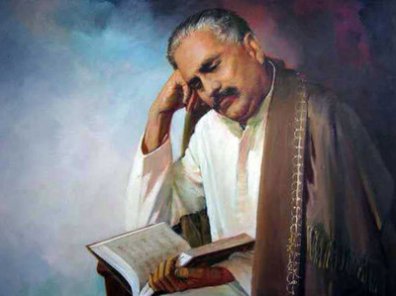
Dr. Muhammad Allama Iqbal ,who was ardent follower of Rumi, perhaps the greatest Sufi poet of all time, openly criticized the self-proclaimed guides of the religion.

However, it is satirical that mullahs of the same breed quote verses of Iqbal to support their pose, yet his poetry is filled with open disapproval of them.

Anyway..
This is  a beautiful translation of Iqbal’s visions about traditional Mullaism..
Our destiny is to promote peace,love and respect in the hearts of everyone regardless of our Mulla’s orthodox visions…
One positive thing about Mullas is that atleast they are keeping our mosques alive 5 times a day…When most of us sleep, Mullas wake up…
I m not taking side with Mullas but infact i am clearing them on a positive note also besides there lot of orthodoxism and stubbornness which should be now ignored by igniting the light of education and awareness in even traditional Mullas…

Here he bashes out at Mullahs in his famous “The Mullah and the Paradise”

When in a vision I saw
A mullah ordered to paradise,
Unable to hold my tongue
I said something in this wise:

‘Pardon me, O Lord
For these bold words of mine,
But he will not be pleased
With houris and the wine

He loves to dispute and fight
And furiously wrangle,
But paradise is no place
For this kind of jangle

His task is to dis-unite
And leave people in the lurch,
But paradise has no temple
No mosque and no church

– translated by Naeem Siddiqui

Share