Nazam and Gazal both are the form of Urdu poetry but have quite differences. When readers try to develop interest in Urdu poetry, while reading Nazam and Gazal they often get confused between Gazal and Nazam. Both are very polite and meaningful forms of Urdu poetry. These are some common differences between Nazam and Gazal.
Characteristics of the Gazal:
- Short in size
- Have Rhythm in phrases called matla.
- Ending point of Gazal used the poet name (pen name). In Urdu it is called takhalus.
- Ends at makta.
- Pattern of all phrases have the same rhythm.
- Gazal divides into complete phrases or verses which gives complete meanings.
- By reading individually any verse doesn’t lose its meaning.
- Commonly verses are not dependent on each other.
Characteristics of Nazam:
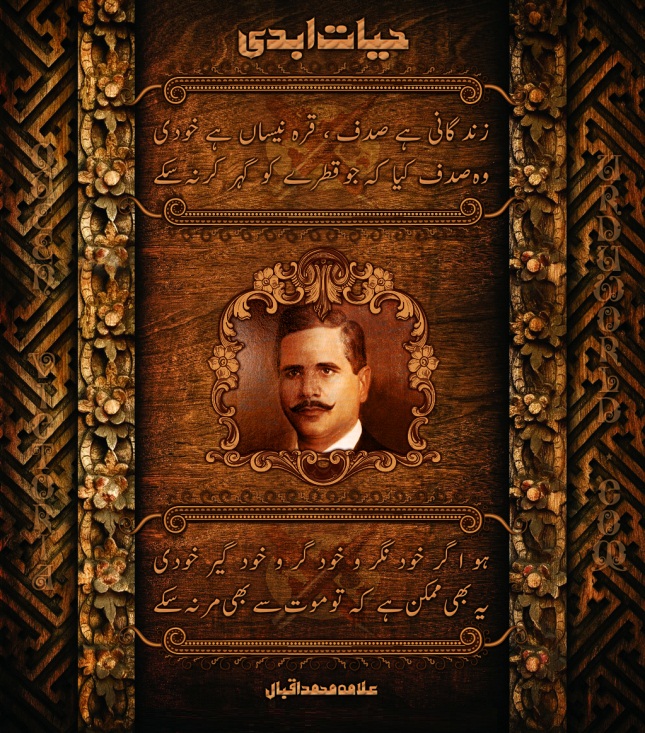
- No size limits. It can be very long or very short in size. For example Nazam Shikwa written by Urdu poet Allama Iqbal is very long. Another Nazam (poem) of Allam Iqbal is “Ram”. It is very short in size.
- Matla and makta are not compulsory for Nazam (poem).
- Verses of Nazam are bound to convey the complete theme.
- Verses cannot convey complete theme individually. They are interlinked.
- Nazam covers more areas than Gazal which is a descriptive form of poetry.


Hisotry :
In poetry (and as the lyrics in songs), the ghazal (Persian/Arabic: غزل, Hindi: ग़ज़ल, Turkish gazel) is a poetic form consisting of couplets which share a rhyme and a refrain. (The word “ghazal” is of Arabic origins, and is pronounced roughly like the English word “guzzle”, but with a different first consonant.) Ghazal (adapted into Urdu from Persian) is a reference to the cry of a gazelle.
The form is ancient, originating in 10th century Persian verse. It is derived from the Persian qasida, which in turn derived from a pre-Islamic Arabian form. The ghazal spread into India in the 12th century under the influence of the new Islamic Sultanate courts and Sufi mystics. Although the ghazal is most prominently a form of Urdu poetry, today, it has influenced the poetry of many languages.
A Ghazal, in short, is a collection of couplets (called sher) which follow the rules of Matla, Maqta, Beher, Qaafiyaa, Radif, Khayaal and Wazan. The traditional complete ghazal has a matla, a maqta, and three other shers in between. The first two shers of a ghazal have the form of a qatha (a specific variation of which is a ruba’ee; most familiar to modern readers from Khayyám’s Rubayyat).
Ghazals were written by the Persian mystics and poets Jalal al-Din Muhammad Rumi (13th century) and Hafez (14th century), the Turkish poet Fuzuli (16th century), as well as Mirza Ghalib (1797–1869) and Muhammad Iqbal (1877–1938), who both wrote Ghazals in Persian and Urdu. Through the influence of Johann Wolfgang von Goethe (1749–1832), the ghazal became very popular in Germany in the 19th century, and the form was used extensively by Friedrich Rückert (1788–1866) and August von Platen (1796–1835). The Kashmiri-American poet Agha Shahid Ali was a proponent of the form, both in English and in other languages; he edited a volume of “real ghazals in English.”
The ghazal is a common song form in India and Pakistan today. Strictly speaking, it is not a musical form, but a poetic recitation. Today, however, it is commonly conceived of as an Urdu song, with prime importance given to the lyrics.
In some modernized ghazals the poet’s name is hidden somewhere in the last verse, usually between the front and end of a word.

Nazm (Urdu: نظم ) is an Urdu poetic form that is normally written in rhymed verse.
YAAD
By: Fazil Jamili
Tum hanstee thee jaisey saawan gaa’ye malhaar
Tum rotee thee jaisey baarish, woh bhi moosla dhaar
Tum chaltee thee subah saweray jaisey chaley hawa
Tum ruktee thee maang raha ho jaisey koi dua
Tum sotee thee toot rahi ho jaisey koi angrraayee
Mein ney jitney mosam dekhhey yaad tumhaaree aayee
Translation:
REMEMBRANCE
You laugh as if sawan is singing malhar
You weep as if it is raining in torrents
You walk as if the breeze is blowing
You stop as if someone is praying
Your sleep is fascinating like a yawn
You are always on my mind eve or dawn
Sawan: rainy season
malhar: a kind of song said to induce rain