Posts Tagged ‘Pakistan’
A Blast from Past — Shias of Pakistan, from 23 March 1940 to 23 March 2012
March 23rd, 2014, posted in DAtEs iN a YeAR, PAKiSTANMohammad Mahmood Alam Passed Away
March 18th, 2014, posted in PAKiSTAN, POEPLes, UNiVERSE
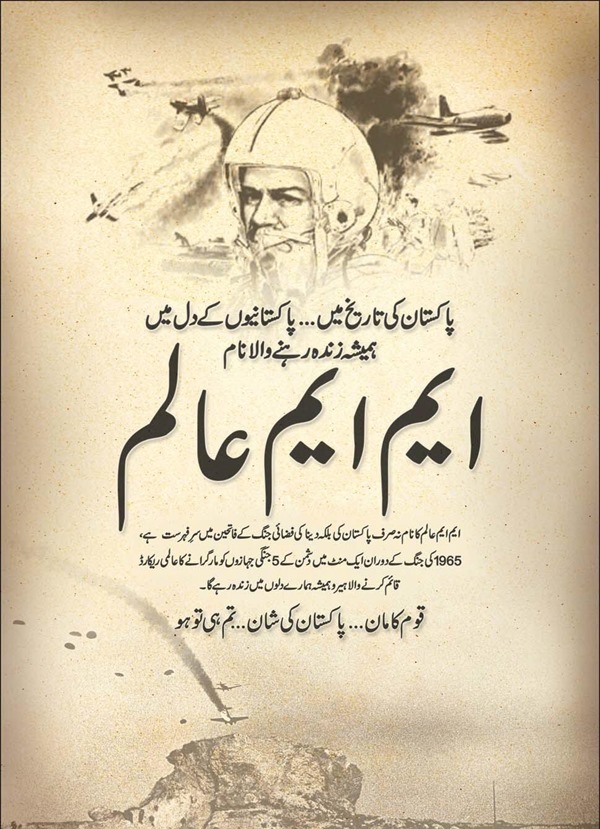
KARACHI: Air Commodore (retd) Mohammad Mahmood Alam passed away in Karachi 18 -03-2013 after a prolonged illness,.
Alam, 78-years-old at the time of his death, is considered a hero of the 1965 Pakistan-India war.
Alam, popularly known as M.M. Alam, while piloting an F-86 Sabre, shot down five Indian war planes in less than a minute during the war and altogether, downed nine war planes in the aerial fighting. His record remains unbeaten.
Alam was later awarded the Sitara-i-Jurrat. He also became the first and only “Jet Ace†in one mission.
The war hero was born on July 6, 1935, in Calcutta, India and was the eldest of 11 siblings. No one in his family before him had been part of the military, and in fact, he joined the armed forces against his fathers will. He is popularly known as M.M. Alam and was nicknamed “Little Dragon”. He retired in 1982 as an Air Commodore.
In December 2012, the air force legend had been transferred to the Pakistan Naval Station Shifa Hospital in Karachi due to illness.


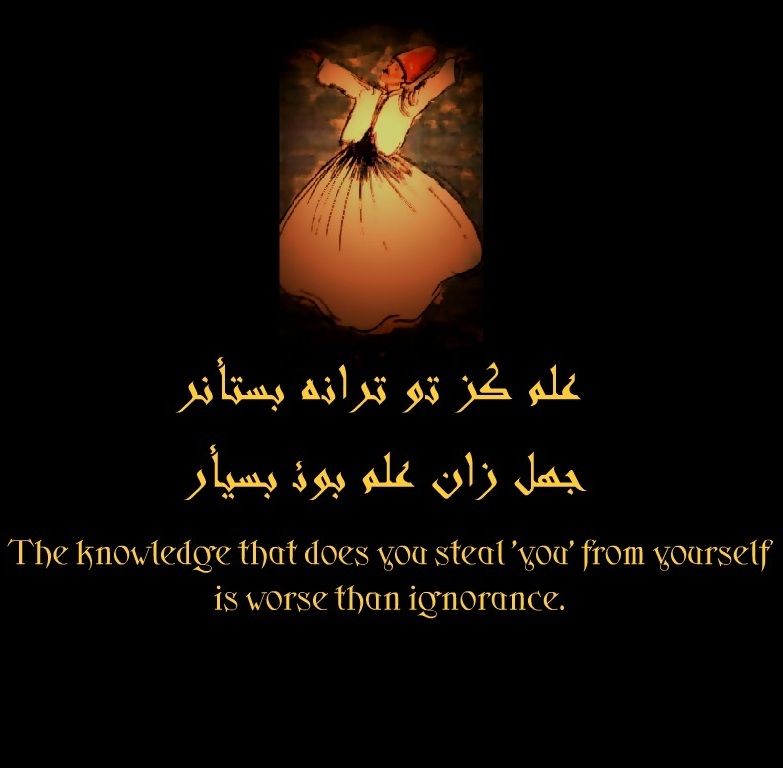
Dervish and Fakir: The Outsiders View of Sufism
February 1st, 2014, posted in Ink On PAPER, Sufism THE BEGINNINGS OF THE MODERN STUDY OF SUFISM lie in the colonial period (roughly 1750-1950), when many of the basic concepts and categories that govern our understanding of the term were first invented. Since the very concept of Sufism is hotly contested among both Muslims and non-Muslims today, it is important first of all to examine briefly the historical development of the European study of Sufism, in order to disentangle the issues underlying the current debate. The modern concept of Sufism emerged from a variety of European sources, including traveler’s accounts of exotic lands and Orientalist constructions of Sufism as a sect with a nebulous relation to Islam. When this picture of Sufism is compared with the internal documentation of Sufi tradition, a number of mismatches appear. Outsider terminology for Sufism stressed the exotic, the peculiar, and behaviour that diverges from modern European norms; in the context of colonialism, this terminology emphasized the dangers of fanatic resistance to European rule.
The two terms that best sum up early European attitudes to Sufism are fakir (Arabic faqir) and dervish(the Turkish pronunciation of Persian darvish). Both words mean more or less the same: faqir is the Arabic word for “poor man,” and dervish (probably derived from a term meaning “standing by the door”) is the Persian equivalent.

The term fakir has a more complicated history, because Persian-writing officials of the Mughal empire in India used the term to describe non-Muslm ascetics, such as yogis, along with Sufi ascetics and wayfarers. The British inherited this terminology when they conquered most of India, and in nineteenth-century English, fakir (or fakeer) was used almost exclusively for Hindu ascetics, whether of the organized monastic fraternities or those whom the Birtish described as “wandering rogues.” The accidental resemblance of the term to the English word faker seems to have encouraged the impression that these ascetics were all frauds and mountebanks.
In contrast to these outsider’s impressions, in their original contexts, both dervish andfakir
were terms that signified spiritual poverty, being poor in relation to God, and hence being dependent upon him. As in other religious traditions, poverty for the Sufis was a sign of turning away from the world and focusing on the divine reality. “Poverty is my pride,” the Prophet Muhammad is reported to have said. Yet the reports of travelers concerning the fakirs and dervishes of the East created a totally different portrait of bizarre behavior that was already a cultural icon over a century ago. Popular American songs of the nineteenth century refer to the dancing dervish as an image of wild and frantic activity. Magazine cartoons today still preserve the image of the fakir lying on a bed of nails. Traveler’s reports were based on fragmentary information, so that the fakir or dervish might sometimes appear to be a solitary figure but at other times was part of a strange brotherhood with peculiar rituals. To be sure, the negative portrait of the dervish had its analogues in some Muslim countries, such as Persia, where the rise of Shi’ism put organized Sufism into disrepute.
This text is an extract from the book by CARL W. PHD ERNST,