Archive for the ‘PAKiSTAN’ Category

Biography of Hafeez Jalandhari

December 21st, 2013, posted in PAKiSTAN, POEPLes
Share

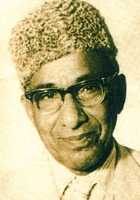
Hafeez JalandhariAbu-Al-Asar Hafeez Jalandhari (Urdu: ابو الاثر حفیظ جالندھری‎) Pakistani writer, poet and, above all, composer of the National Anthem of Pakistan. He was born in Jalandhar, Punjab, British India on January 14, 1900. After independence of Pakistan in 1947, Hafeez Jalandhari moved to Lahore. Hafeez made up for the lack of formal education with self-study but he has the privilege to have some advise from the great Persian poet Maulana Ghulam Qadir Bilgrami. His dedication, hard work and advise from such a learned person carved his place in poetic pantheon.

Hafeez Jalandhari actively participated in Pakistan Movement and used his writings to propagate for the cause of Pakistan. In early 1948, he joined the forces for the freedom of Kashmir and got wounded. Hafeez Jalandhari wrote the Kashmiri Anthem, “Watan Hamara Azad Kashmir“. He wrote many patriotic songs during Pakistan, India war in 1965.

Hafeez Jalandhari served as Director General of morals in Pakistan Armed Forces, and very prominent position as adviser to the President, Field Marshal Mohammad Ayub Khan and also Director of Writer’s Guild.

Hafeez Jalandhari’s monumental work of poetry, Shahnam-e-Islam, gave him incredible fame which, in the manner of Firdowsi’s Shahnameh, is a record of the glorious history of Islam in verse. Hafeez Jalandhari wrote the national anthem of Pakistan composed by Ahmed Ghulamali Chagla also known as Ahmed G Chagla. He is unique in Urdu poetry for the enchanting melody of his voice and lilting rhythms of his songs and lyrics. His poetry generally deals with romantic, religious, patriotic and natural themes. He chooses his themes, images and tunes from the subcontinent and his language is a fine blend of Hindi and Urdu diction, reflecting the composite culture of South Asia.

Early life

Hafeez was born in Jalandhar, British India to a Rajput family. His father was Shams-ud-din who was Hafiz-e-Qur’an. He firstly studied in mosque and was then admitted in a local school. He then received formal education up until seventh grade (class).

Recently, another poet Jagannath Azad, son of Lahore-based poet Tilok Chand Mahroom, claimed that long before Hafeez Jalandhari’s lyrics were adopted as the national anthem in 1950s, Pakistan had an anthem written by him. He was commissioned by Muhammad Ali Jinnah to write the anthem three days before the creation of Pakistan in 1947. After long debates on this issue in Pakistan, researchers have declined Azad’s claim to be the poet of first national anthem of Pakistan.Dr Safdar Mehmood, a famous researcher in Pakistan, has written an article in ‘Daily Jang’ (6 June 2010), researching this topic a bit further. Based on his research, Dr Mehmood suggests that while there might be a possibility that Azad might have written a national (milli) song which was broadcast by Radio Pakistan after 1947, however, there is no evidence of Azads meeting with Jinnah nor of the claim that he wrote a national anthem for Pakistan which was approved by Jinnah and which was broadcast by Radio Pakistan as the new countrys national anthem. In fact, there is no record of the broadcast of Azad’s anthem in the official archives of Radio Pakistan. Azad has also claimed that he was awarded ‘Iqbal Medal’ in 1979 by the Government of Pakistan. Again, this claim is not true as his name is not included in the governmental record of national award holders maintained by the Cabinet Division of Pakistan.

Spiritual life

Hafeez Jalandhary was a child when he met Maulana Nawab ud din Ramdasi (1870-1946), a great saint of sub continent.Hafeez was reciting Naats in a mesmerizing voice.Maulana stopped and asked Hafeez about his occupation.Hafeez answered he left education and is very poor.Maulana took Hafeez with himself to Ramdas.Hafeez lived with Maulana a lot of years.Hafeez fell in so devotion with Maulana that they became a traditional follower (Mureed) of Maulana Ramdasi and attached himself till last breath.Hafeez was so devoted and love ful to his spiritual guider(Murshid) that according to shorish kashmiri , Hafeez and Haji Laq Laq used to sing spiritual verses and Qawwalis to Hazrat Khawaja Nawab Ud din.In “Shamsheer o Sana” , Hafeez expressed his feelings in a classical way.Hafeez Jalandhari , Haji Laq Laq and Mulana murtaza khan Maikash were famous lovers of Maulana Ramdasi.

Marriage

He first married in 1917, when he was seventeen years old. His first wife was his cousin “Zeenat Begum”. They altogether had seven children, all of them girls and no boys. In 1939 he married for the second time with a young English woman and had one girl with her. This marriage ended in a divorce. His first wife died in 1954. In 1955 he married with Khurshid Begum. The third relation also gifted him one girl. Her name is Raza Hafeez and after getting married she became Raza Riaz.

Later life

In 1922–1929 he remained the editor of a few monthly magazines namely, “Nonehal”, “Hazar Dastaan”, “Teehzeeb-e-Niswan”, “Makhzin”. His first collection of poems Nagma-e-Zar was published in 1935. After the World War II, he worked as the director of the Song Publicity Department. During this same time he wrote songs that were much liked by the public.
Death

He died on December 21, 1982 at the age of eighty two years. He was buried in Model Town, Lahore but later on his dead body was re-buried in the tomb near Minar-e-Pakistan.

Awards

For his literary and patriotic services he was awarded with the most prestigious awards of Hilal-e-Imtiaz and Pride of Performance.

Hymn of Kashmir

A patriotic poetic song of Watan hamara Kashmir, is considered to be the official regional State anthem or State song for Azad Jammu and Kashmir, it was written in the mid-1960s, which was inspired by the conflict of Indo-Pak war II.

Azads lyrics Ae sarzameene paak/Zarray teray haen aaj sitaaron se taabnaak/ Roshan hai kehkashaan se kaheen aaj teri khaak/Ae sarzameene paak (Oh land of Pakistan, the stars themselves illuminate each particle of yours/rainbows brighten your very dust) were replaced six months after Jinnahs death in September 1948. The National Anthem Committee chose Hafeez Jalandharis poem from among 723 submissions.

Shahnam-e-Islam

His monumental work of poetry, Shahnama-e-Islam gave him incredible fame which, in the manner of Firdowsi’s Shahnama, is a record of the glorious history of Islam in verse. Hafeez Jullandhari wrote the national anthem of Pakistan composed by S.G.Chhagla. He is unique in Urdu poetry for the enchanting melody of his voice and lilting rhythms of his songs and lyrics. His poetry generally deals with romantic, religious, patriotic and natural themes. He chooses his themes, images and tunes from the subcontinent and his language is a fine blend of Hindi and Urdu diction, reflecting the composite culture of South Asia.

Through this, I believe Jinnah Sahab wanted to sow the roots of secularism in Pakistan, read a post that quoted Azad. The debate comes at a time when Pakistanis are having a fresh look at the role played by Jinnah in the partition, thanks to a new biography of the countrys founder penned by former BJP leader Jaswant Singh.
He first married in 1917, when he was seventeen years old. His first wife was his cousin Zeenat Begum. They altogether had seven children, all of them girls and no boys. In 1939 he married for the second time with a young English woman and had one girl with her. This marriage ended in a divorce. His first wife died in 1954. In 1955 he married with Khurshid Begum. The third relation also gifted him one girl.

In 1922 — 1929 he remained the editor of a few monthly magazines namely, Nonehal, Hazar Dastaan,Teehzeeb-e-Niswan, Makhzin. His first collection of poems Nagma-e-Zar was published in 1935. After the World War II , he worked as the director of the Song Publicity Department. During this same time he wrote songs that were much liked by the public.
Share

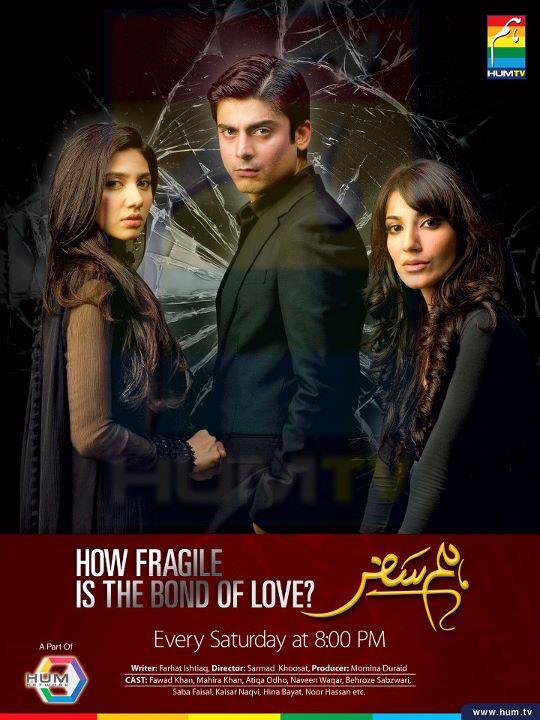
Humsafar-Companion- Urdu Poetry Translated

December 16th, 2013, posted in LYRiCS, PAKiSTAN, UNiVERSE
Share

NaseerTurabi

I didnt wrote this…
Found online…
And thought share for you guys….
I would like to add here that Naseer Turabi wrote this beautiful and so honest poetry when our brothers ,sisters ,mothers,fathers got separated from us and live in there new home i.e in 1971 after the fall of Dhaka . May they live happily and peacefully and may GOD and HIS mercy be us on all.

When we parted ways,
Neither you cried nor I,
But, what is this,
A peaceful sleep since,
Has not touched our eyes?

He was my companion,
But not in harmony were we,
Like the clouds and sunlight,
Together but as apart as can be.

There were feelings of animosity,
Indifference,
And anguish between us,
My departed lover, had been everything,
But unfaithful.

Last time I looked into his eyes,
My poetry reflected back at me,
Verses, that which I had never,
Recited to anyone.

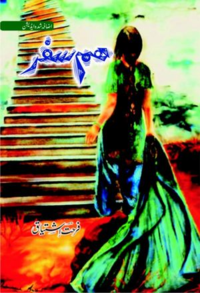
Humsafar novel

There is nothing more beautiful than Urdu poetry and English language can never do justice to it. So, this is a rather failed attempt at translating Naseer Turabis poetry but I cant help it as I just love the ghazal. Following is the Urdu version (only the part that I was able to translate):

Tark-e-taluqat pe roya na tu na main,
Lekin ye kya ke chain se soya na tu na main.

Woh humsafar tha magar us say humnawaayi na thi ,
Keh dhoop chayon ka alam raha, judaayi na thi.

Adawatain theen, taghaful tha, ranjishain theen magar,
Bicharne walay mai sab kuch tha, bewafayi na thi.

Bichartay waqt bhi un aankhon mai thi humari ghazal,
Ghazal bhi woh jo kisi ko kabhi sunayi na thi

Humsafar darma

Share

Aashiqaan -e- Jaun ko Jaun Elia ki 81 Youm -e- Wiladat

December 14th, 2013, posted in Jaun Elia, PAKiSTAN, POEPLes
Share

About :

He was a notably Urdu poet, philosopher, biographer, scholar and the giant of Urdu Literature.


Biography :

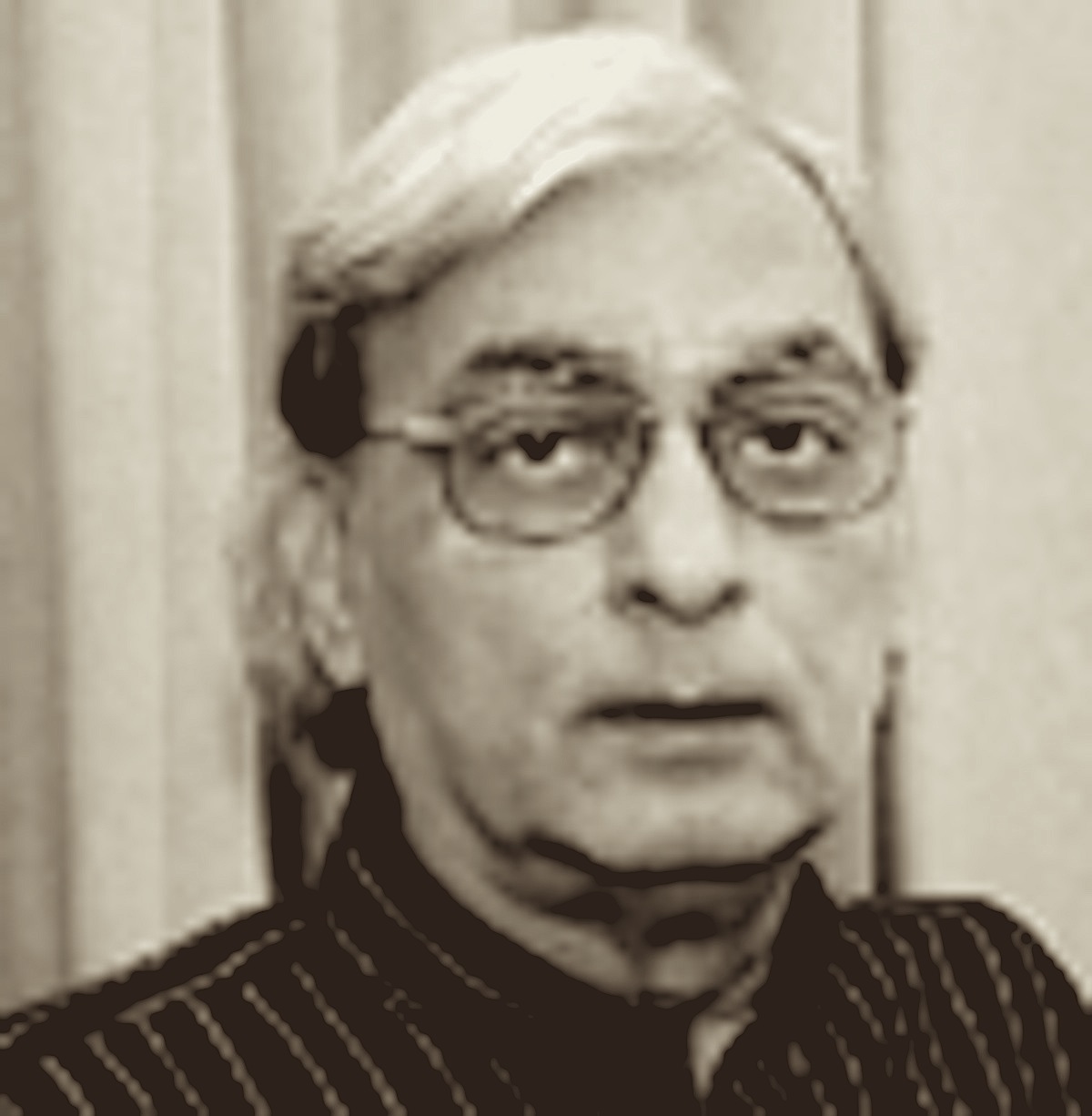
Jaun Elia  (Urdu: جون ایلیا, December 14, 1931 – November 8, 2002) was a notable Pakistani Urdu poet, philosopher, biographer and scholar. He was widely praised for his unique style of writing. He was the brother of renowned journalist and psychoanalyst Rais Amrohvi and journalist and world-renowned philosopher Syed Muhammad Taqi, and husband of famous columnist Zahida Hina. He was a man of letters, well versed in Arabic, English, Persian, Sanskrit and Hebrew.
Jaun Elia was born on December 14, 1931 in an illustrious family of Amroha, Uttar Pradesh. He was the youngest of his siblings. His father, Allama Shafiq Hasan Elia, was deeply involved in art and literature and also an astrologer and a poet. This literary environment modeled him along the same lines, and he wrote his first Urdu couplet when he was just 8.
Jaun was very sensitive in his early teen age. His preoccupations in those days were his imaginary beloved character, Sophia, and his anger at the English occupiers of India. He used to do dramatic presentations of the early Muslim period, and hence his knowledge of Muslim history was recognized by many. According to him, his early poetry reflected the dialogue nature of stage drama.
A close relation of Elia’s, Syed Mumtaz Saeed, recalled that Elia also went to Syed-ul-Madaris in Amroha, a Madressah (Koranic school). “Jaun had a way with languages. He could learn them effortlessly. Apart from Arabic and Persian that he had learnt at the Madressah, he acquired great proficiency in English and a smattering of Hebrew.”
During his youth, the united India was involved in a Muslim-Hindu feud, which led to the partition of the country on religious lines once British rule ended. Being a Communist, Elia was averse to the idea, but finally accepted it as a compromise. Elia migrated to Pakistan in 1957, and made Karachi his home. Before long, he became popular in the literary circles of the city. His poetry, which bears ample testimony to his wide-ranging reading habits, won him acclaim and approbation. Poet Pirzada Qasim said: “Jaun was very particular about language. While his diction is rooted in the classical tradition, he touches on new subjects. He remained in quest of an ideal all his life. Unable to find the ideal eventually, he became angry and frustrated. He felt, perhaps with reason, that he had squandered his talent.” He was a prolific writer, but could not be convinced to publish his work. His first poetry collection Shayad (an Urdu word which means “Maybe”) was published in 1991, when he was 60. The poetry presented in this collection added Jaun
Elia’s name in the Urdu literary canon forever. Jaun Elia’s preface in this collection provided deep insights into his works and the culture within which he was expressing his ideas. The preface can also be considered as one of the finest examples of modern Urdu prose. It covered his intellectual evolution in different periods of time, and his philosophy of poetry, science, religion, etc. The second collection of his poetry Ya’ani was published posthumously in 2003 . Afterwords Jaun’s trustworthy companion Khalid Ansari has compiled and published his three consecutive collections, “Gumaan” (an Urdu word which means “Illusion”) in 2004,”Lekin” 2006 and “Goya” 2008, one more collection “Kyon” is now under processing.
An eminent Urdu literary critic, Dr. Muhammad Ali Siddiqui has called Jaun Elia one of the three most eminent ghazal poets of Urdu of the second half of the twentieth century.
Jaun Elia was an unabashed open anarchist and nihilist in generally a conservative and religious society. His elder brother, Rais Amrohvi, himself a poet and influential intellectual, was brutally murdered , and ever after his death, Jaun was conscious about what he would say in public.

Jaun was also involved in translation, editing and other activities. He briefly worked as an editor with Ismaili Tariqah and Religious Education Board (ITREB), in Karachi Pakistan. His translation of various Mautazalite treatises, a book on 12th century Fatimid revolutionary Hasan Bin Sabah, and also various texts about the Ismaili sect in Islam are a major contribution to the Urdu language and literature. His prose and other translation of major Ismaili philosophical works are not easily available, yet some of these can be found at Ismaili Tariqah Board libraries in Karachi and elsewhere.

He acquired encyclopedic knowledge of philosophy, logic, Islamic history, the Muslim Sufi tradition, Muslim religious sciences, Western literature, and Kabbala. He also synthesized this knowledge into his poetry that also differentiates him from his modern contemporaries.
He also edited Urdu literary magazine “Insha”, where he came to know of another prolific Urdu writer Zahida Hina, and finally married her. Zahida Hina, a progressive intellectual in her own right, still writes for dailies, Jang and Express, on current political and social issues. He had 2 daughters and a son with her. Jaun and Zahida were divorced in mid 1980s. This left Jaun devastated and alone. He became alcoholic and depressed.

He died after a protracted illness on November 8, 2002 in Karachi.

Poetry collections :
Shayad, 1991
Ya’ani, 2003
Gumaan, 2004
Lekin, 2006
Goya, 2008

About Him :
Born December 14, 1931
Amroha, Uttar Pradesh, British India
Died November 8, 2002 (aged 70)
Karachi, Sindh, Pakistan
Occupation Urdu poet, Scholar
Nationality Pakistani
Ethnicity Muhajir
Genres Ghazal
Notable work(s) “Shayad”
Spouse(s) Zahida Hina
Relative(s) Shafiq Hasan Elia (father)
Rais Amrohvi (brother)
Syed Muhammad Taqi (brother)

Aashiqaan -e- Jaun ko Jaun Elia

Jaaney kaun zamaaney thay wo, jin mein thee dil ki guzraan,
Likhtey hain yun apney kutbey jaisey kitaabon ke thay ham..!

Aashiqaan -e- Jaun ko Jaun Elia ki 81 Youm -e- Wiladat


Share

Ogling At Girls

October 15th, 2013, posted in COMiCS, GiRLs, Ink On PAPER, PAKiSTAN, Scarface'S DIARY
Share

guy ogling girls

As humans, we like to look at beautiful things. We are hardwired to look at beautiful things. In fact, that is what defines aesthetic beauty: that something is pleasing to look at. So how come looking at someone because  she is beautiful can feel so… squeamy?
Well it does and not in a good way. And most important of it non of them like it.

There body is not a past-time for you. So dont ogle them..

Problem :

Educational institutions are supposed to be temples of learning. But many colleges, universities, and other places such has malls or parks etc are proving to be safe  havens for eve teasers, where girls feel ‘uncomfortable’ if not downright unsafe.
Female students of many city colleges say that gangs of boys station themselves in parking lots, corridors and staircases, staring down every girl passing by and making them uncomfortable.

“This problem exists in every coeducational institution. Now, it has somehow become part of the system, and we have learnt to ignore it,” said a student.

Another girl told me, “Walking alone in my college is very uncomfortable. Our canteen is on the way from the parking lot to my class and it is a nightmarish walk with boys commenting and ogling at every passing girl.”

If its not a co-education than even if it is a girl’s college there is no problem inside the college, but there are some irritants outside. “Sometimes boys stand in  groups and it becomes uncomfortable,” Another girl told me.

The worst part is that all girls seem to just ignore the eve teasing incidents and refrain from complaining to the authorities or to there elders.. They fear  retribution and feel that nobody will stand by them.

guy ogling another girl

Like a girl told me that “My seniors told me that once a girl complained and within some time some boys broke a tubelight on her head. Such things fill us with fear. How can we complain after hearing this?” said the student girl.

Another one said that when she told the issue to her parents they changed her tutoring place.

Boys ogling and passing comments on the girls around, couples indulging in public display of affection and bikers following girls around are among the things that ruin the fun of enjoying a cool breeze at the lakeside or sea-side for most women. Same thing goes if its malls or other shopping places or any food place.

We all have for surly once witnessed guys passing unwarranted and unwanted comments even if a girl goes to have coffee with friends. Guys around passing cheesy comments, hovering around or even following the girls.

Solution :

But the real thing is that as time is passing by and we are going into era we dont realize there are some major changes that are occuring. And these are the changes which we cannt ignore no matter what we say or do.

But we can avoid them and try to stop it as well.

In my point of view with all respect I prefer that a girl should never be let go alone. There should always brother ,father ,son or uncle should always be with him sothat we could avoid such things. Though ladies would definately disagree with me on this and would say they need freedom and all that but my question is that would you like to get harrass from time to time or do you like to have fun and enjoy the places with your friends and family.

To make the places more safe and comfortable.Colleges should take enough measures to guard them. The boys cannot stand too close to the college gates as there should be security at all the gates.

I also would like to suggest that the schools and college should also conducts self-defence workshops for girls.

girl been ogled while dancing

Girls have to play and important role as well. They should know there limits. They should know how to behave properly in public places. When men,boys are arround should know how to talk, how to walk and the most important how to dress. I get it girls dress up attractively, it’s their choice, and they didn’t dress up to be ogled at, I should be clear about that.But you shouldnt do anything which would proke a guy.I hope that get clears to you as well.

ogling is not right thing

The role of boys,men can also not ignore in this matter. Education has its role.Men should taught to be chivalrous and respectful towards women. This kind of training is required for all. And education is not the only thing. A father should teach his son how to behave infront of girls and ladies. A teacher should tell his students.

We all have to understand that the rowdiness of a few people has ruined the purpose of a very beautiful place.

ogling at girl

Share

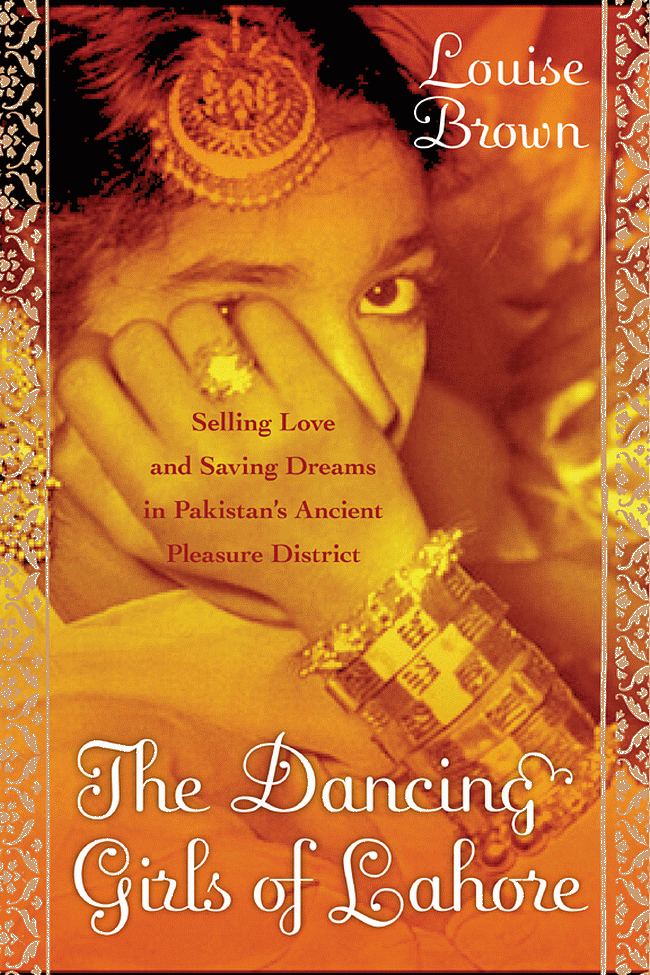
Dancing Girls of Lahore

October 14th, 2013, posted in PAKiSTAN, STORiES
Share

Dancing Girls of Lahore,Dancing Girls ,Lahore,heera mandi,danicng,girl,sex

You can read the book here online or you can easily download it :

http://www.apnaorg.com/books/english/dancing-girls-lahore/book.php?fldr=book

Share